

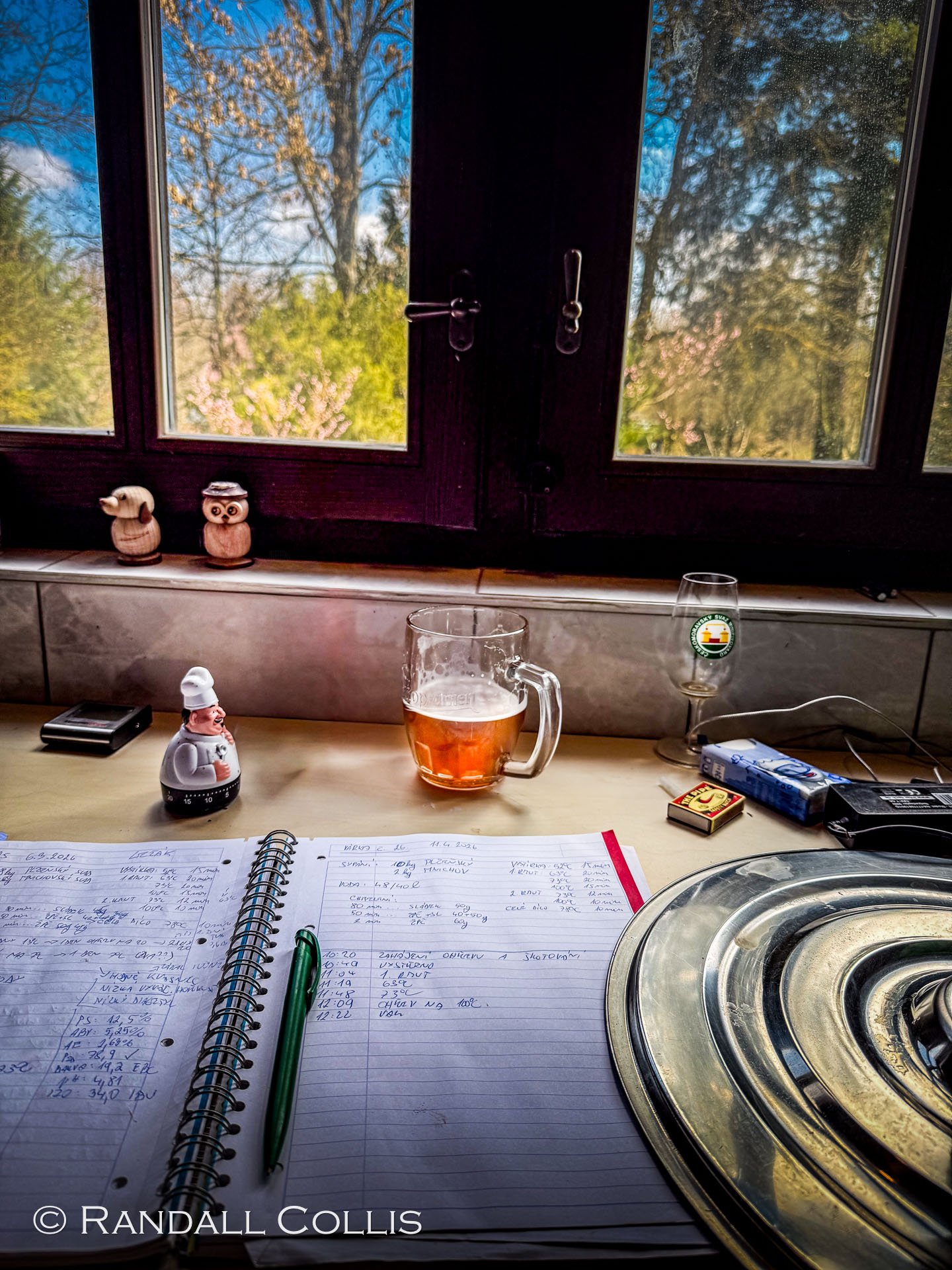
I’ve kept the last bottle of beer in my refrigerator, waiting for the right moment to open it. It holds a spring day in Kamýk nad Vltavou: sunlight through budding trees, warm air, and laughter. I like knowing there’s still one bottle left—a little of that day waiting for another.
That spring, the kitchen belonged to the grain.
Honza was one of my first friends in Czechia. A master brewer at Staropramen in Prague, he also brews at home the way his grandfather’s generation did—not because of nostalgia, but because the beer is better. Maybe.
I’ve come to think of each batch as an act of re-creation: a taste remembered. An evening remembered. A self remembered.
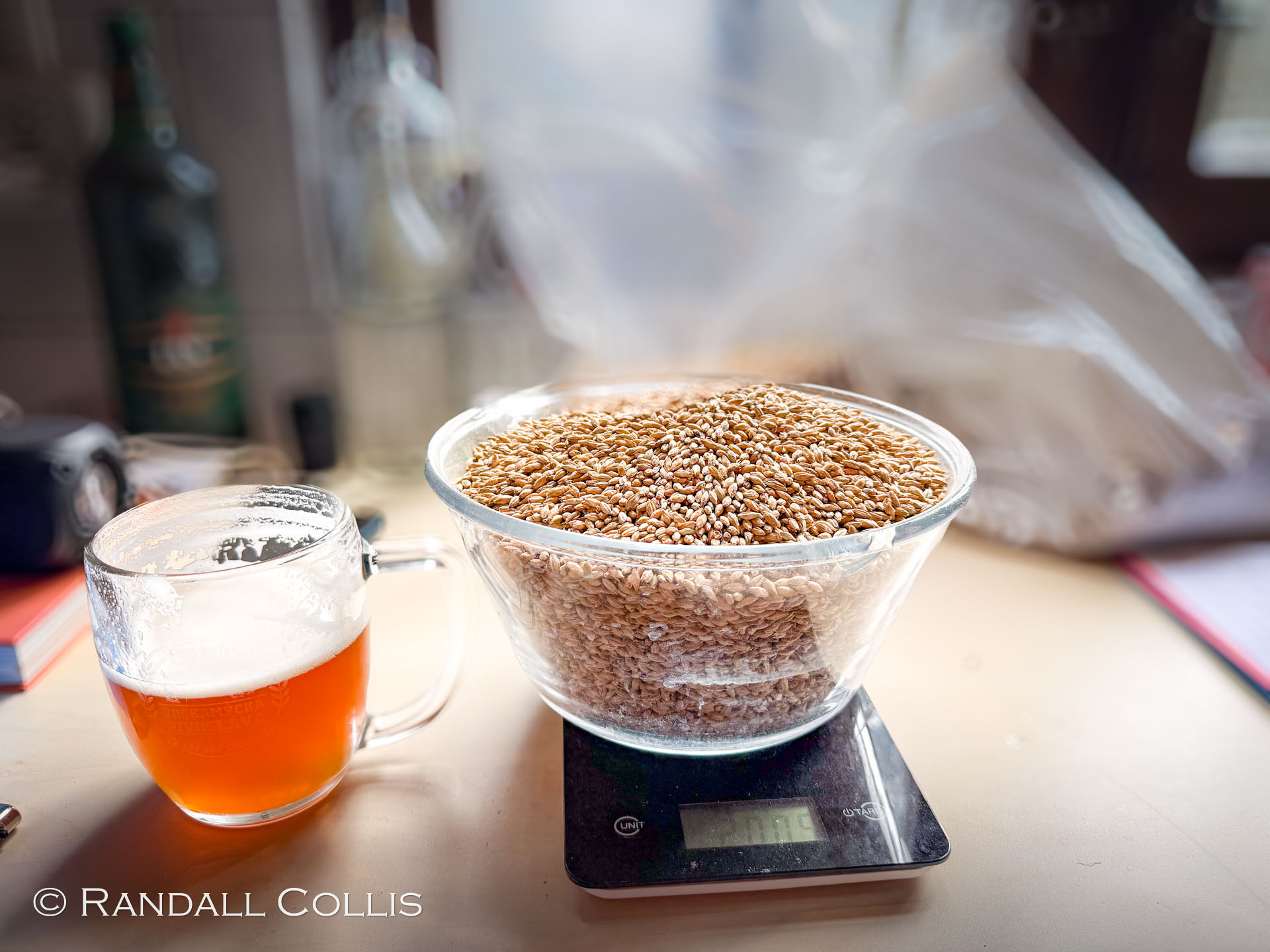
The past goes into the kettle dry and unchanged. What emerges is sweeter, warmer, and not quite what it was.
Memory gives nostalgia its sweetness—and its bitterness. Perhaps beer is not so different.
The grist
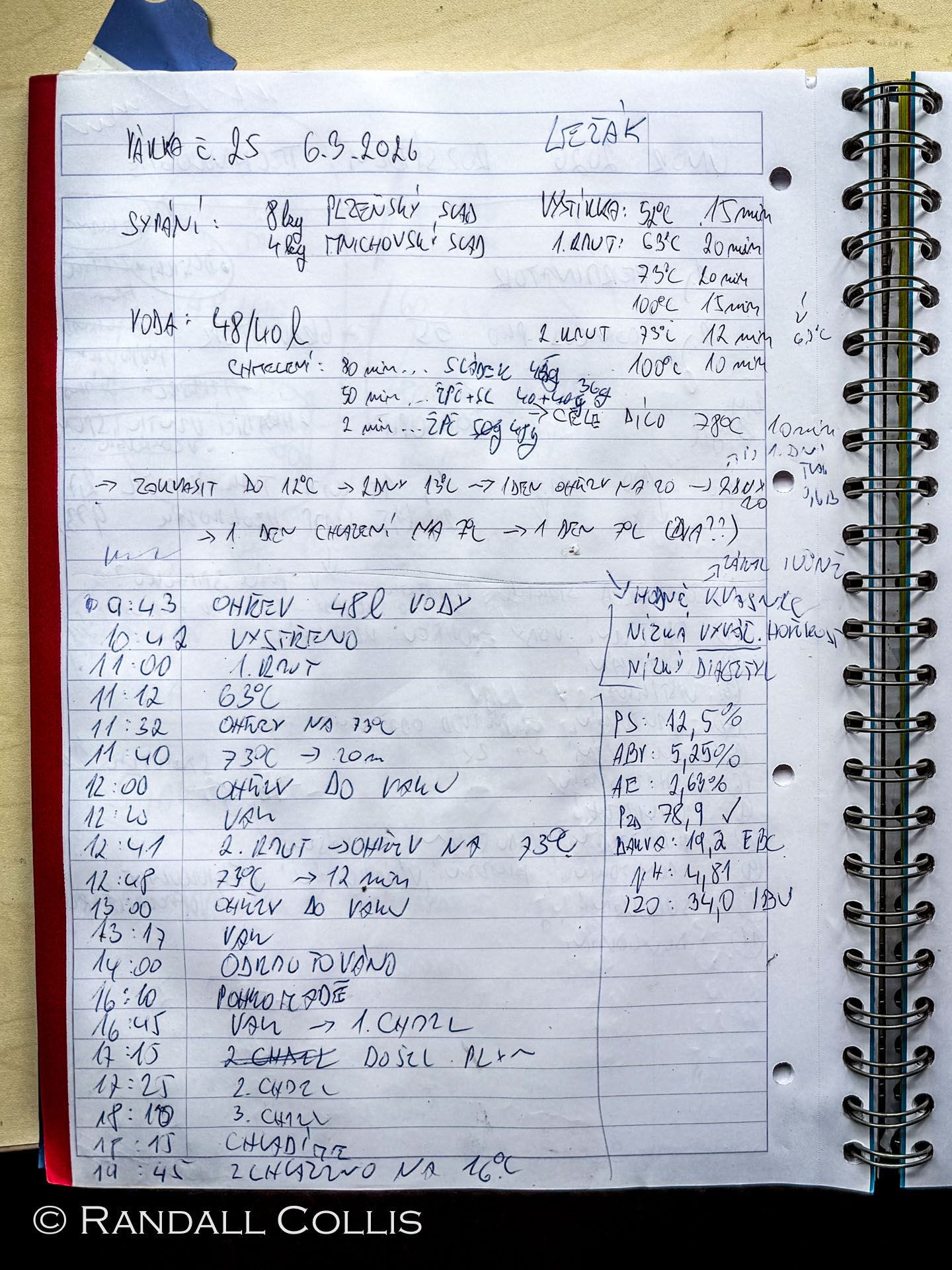


Honza opens his notebook to the recipe for the previous batch, written down while it could still be measured, before it became merely remembered. I admire the care in those pages, knowing I’d never have kept such a faithful account.
For now, the grain is simply grain, waiting for the mill. It becomes grist, and the past is still something I can weigh—malt in a bag, numbers on a scale, a fact I can hold.
My memory begins here, in something that actually happened.
Mashing


Heat is where the alchemy begins. The grist steeps in hot water, starch becoming sugar. Steam fills the light at the kitchen window as I turn and turn the paddle.
The grain’s earthy fragrance takes me back to harvest days at the Rew grain elevator in Pendleton, receiving barley and wheat from local farmers. With each stroke, I settle into an old rhythm, turning toward a lager we won’t taste until summer.
Lautering


Then the selection. The sweet liquid is drawn off and carried forward; the spent grain stays behind in the tun. Like a memory that keeps what it wants of an evening and lets the rest fall away.
Honza crouches on the kitchen floor, inspecting the liquid in a tasting glass, judging the clarity of the runnings. For him, the recipe isn’t nostalgia but specification: a memory to be re-created faithfully, while mine need only be worth savoring.
Several times I ask, “What if we added this, or tried that?” His answering glare needs no translation. I can only laugh. Here, at least, brewing and nostalgia part company: my memories allow a little invention; Honza’s recipe does not. I begin to suspect I could never be a brewer.
Sweet wort with rum


Here I learn a Czech tradition: sweet wort with a shot of rum, a drink for the brewers. This, Honza tells me, is where we taste the past—before bitterness enters and fermentation begins its slow rewriting. By the time we tap the keg in summer, only a trace of this sweetness will remain.
“Dej Bůh štěstí,” Honza says with a smile—the Czech brewer’s motto and wish for good fortune. Whether the good fortune lies in another glass or in knowing when to stop, I’m not sure.
The wort is the truth straight-up: warm, sweet, and gone in a swallow.
The boil and hops


Now the sweetness meets its aching bite. Hops go into the rolling boil, and bitterness arrives—but here is the strange mercy of it: hops preserve. The bitterness and the keeping are done in one motion.
I think nostalgia does something similar: it holds the past for us, changing it in the keeping. A little sweet poison, perhaps.
I lean closer. Not the bright grapefruit scent I remember from Oregon hops back home, but something subtler: grass, dried herbs, a trace of woody spice. Honza is using Czech Saaz hops. For a moment, I wish I had a few Oregon hops to toss in as well. This time, I keep the suggestion to myself. I glance at Honza. He laughs. I suspect he knows what I’m thinking.
The pause


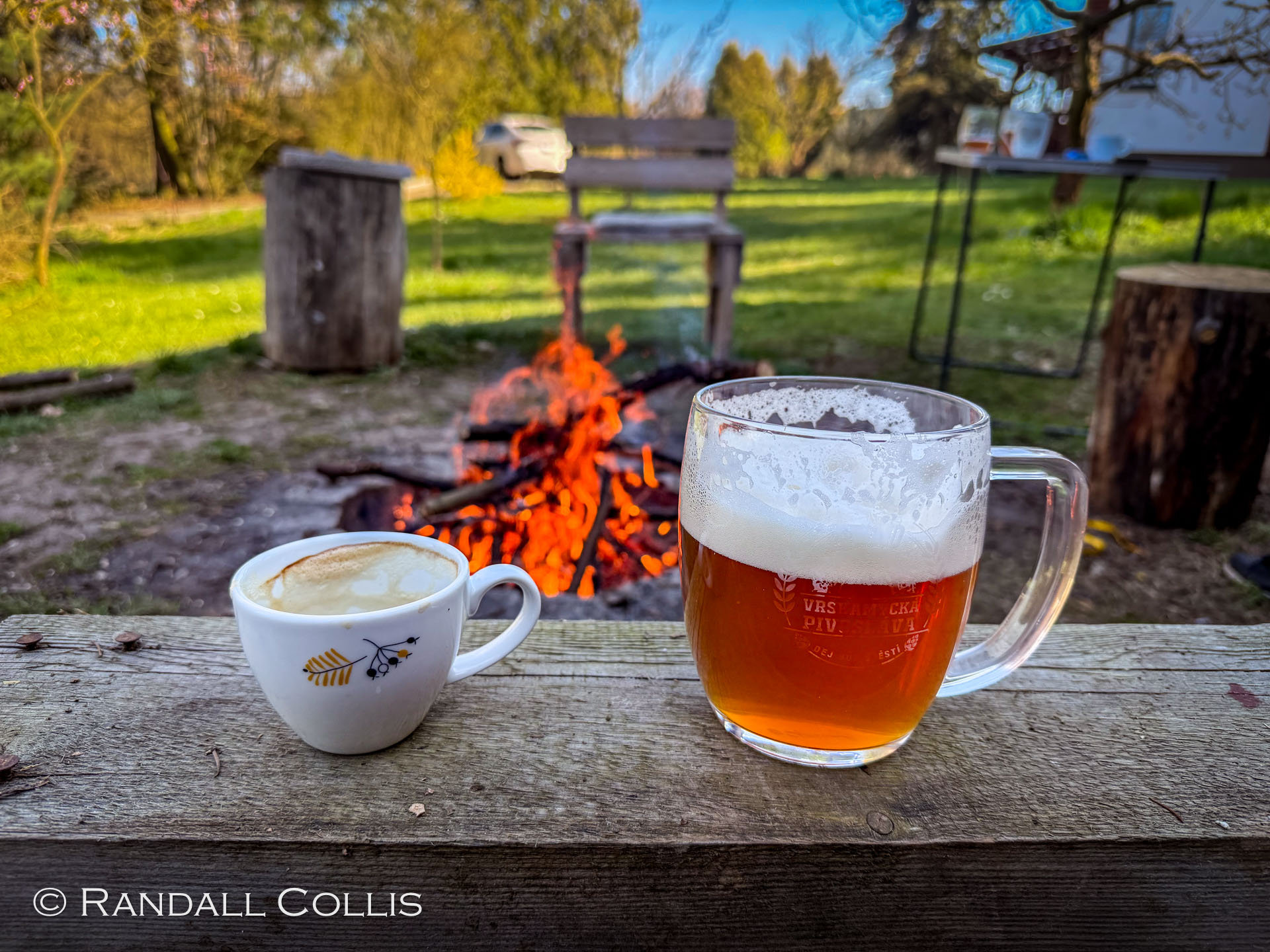
The boil ends; the wort must cool before the yeast can go in. For us, a pause. The day opens into its best hour—bramboráky at the table, the fire lit. The previous brew fills our glasses while the next waits nearby.
Honza photographs his beer with his phone. I recognize the impulse: to capture a moment before it becomes the past.
Fermentation


In the dark, the sweetness we made today will become alcohol. Nothing to do now but wait and trust.
Fire, music, friends
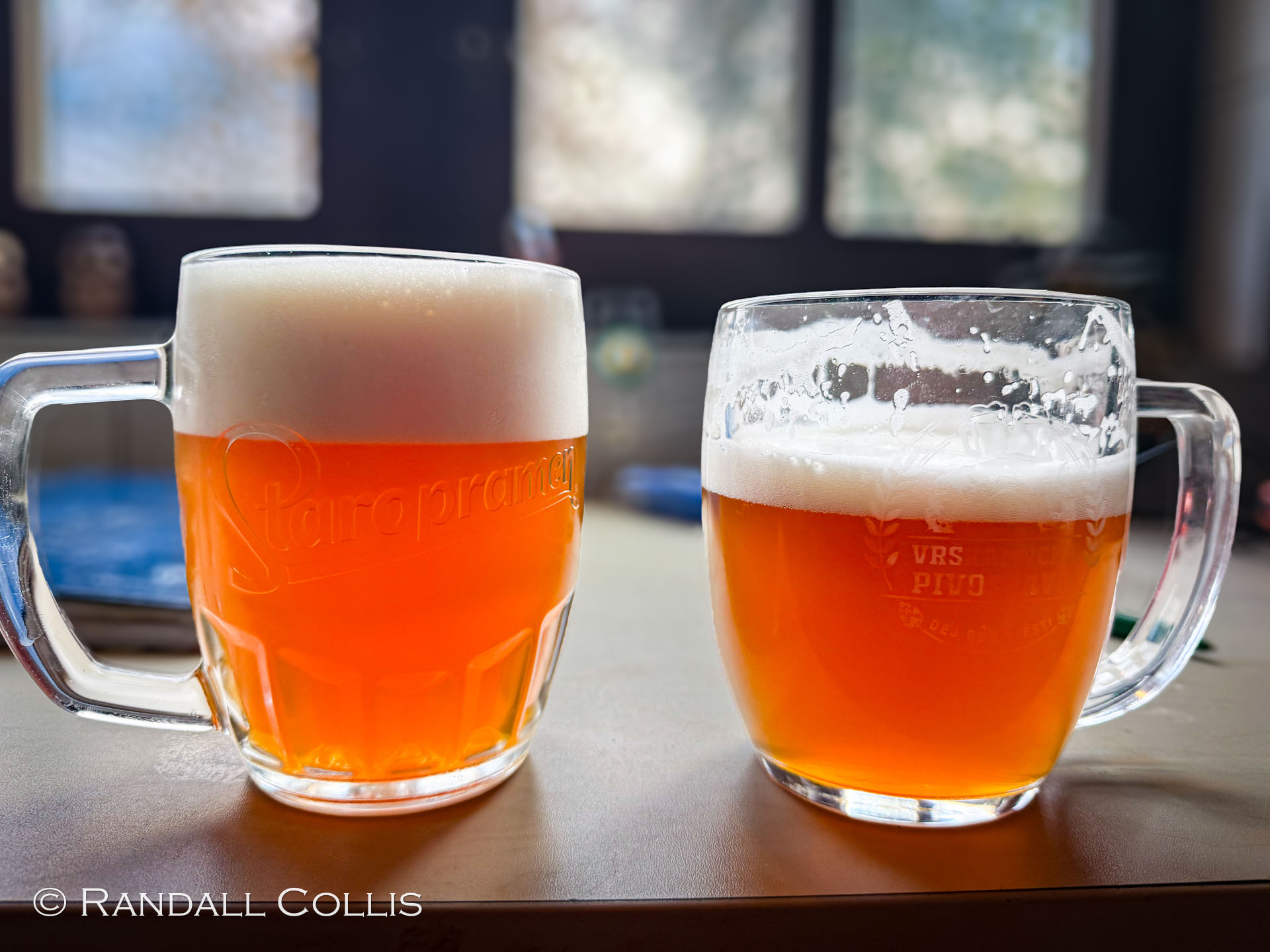
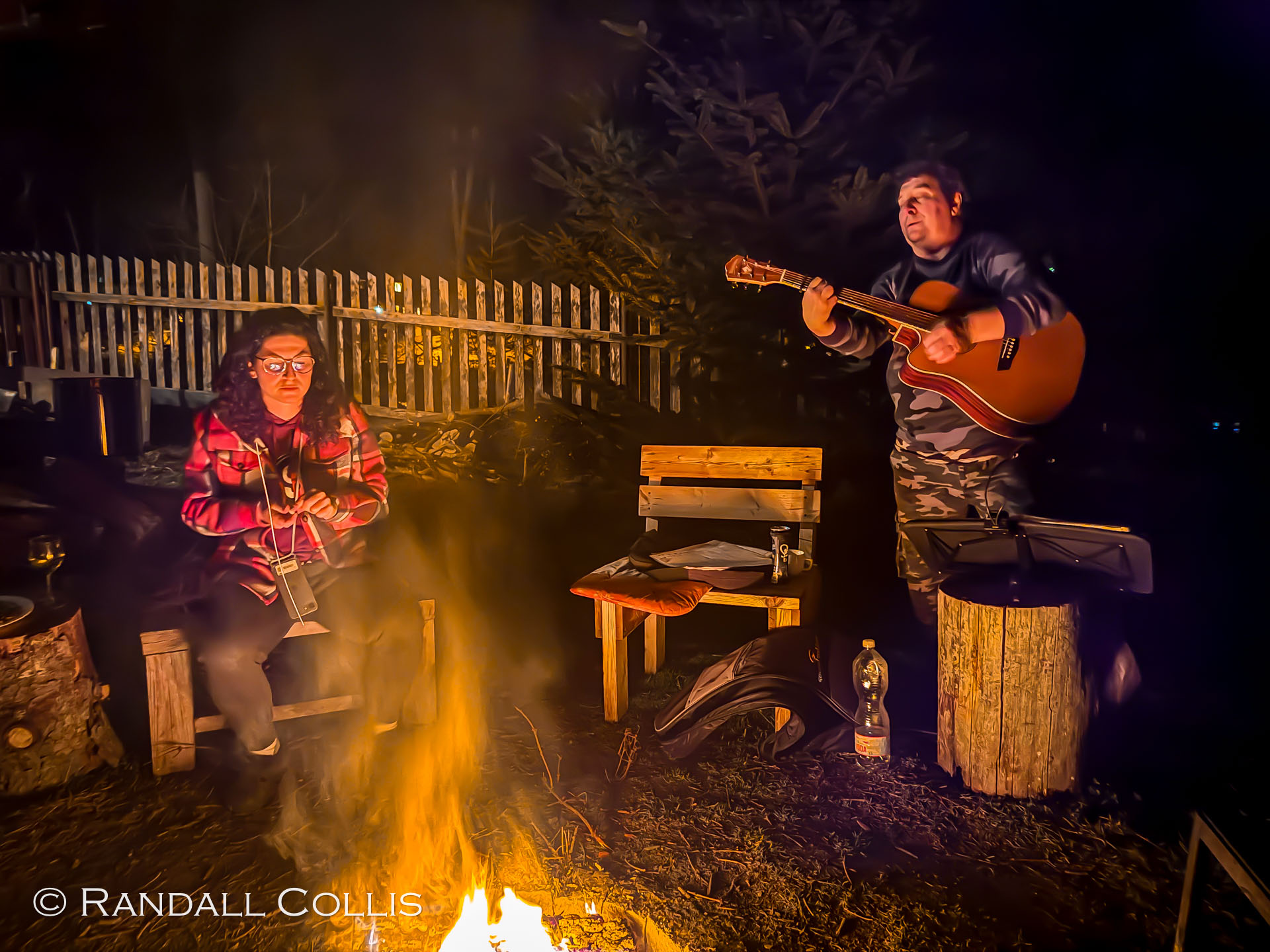
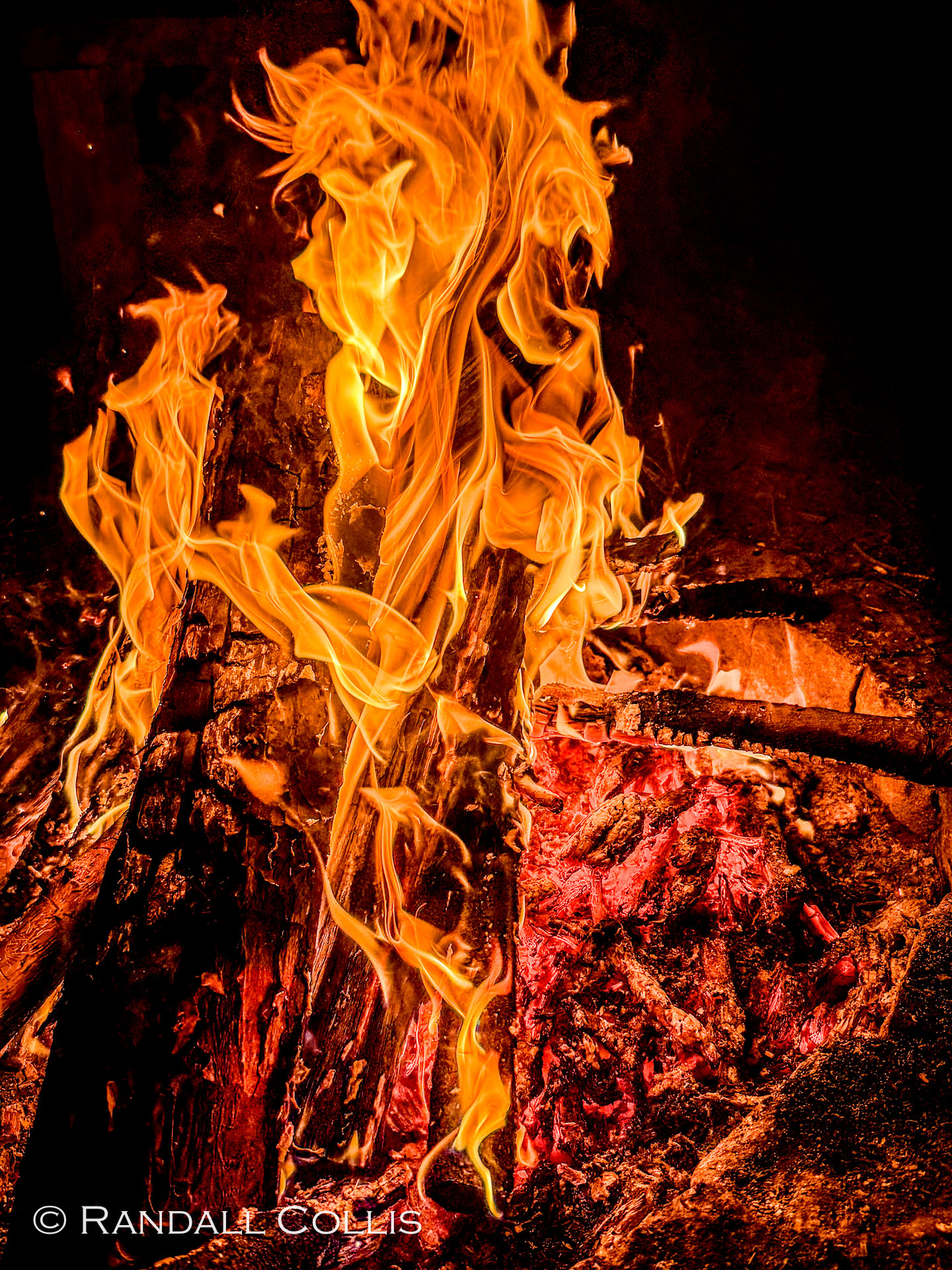
Night comes, and we drink the previous batch by firelight. Honza’s wife, Tereza, sits next to her father as he plays his guitar. He plays a tune I know, and with my voice off-key, I sing without care.
Perhaps I’m beginning to remember it before it is over.
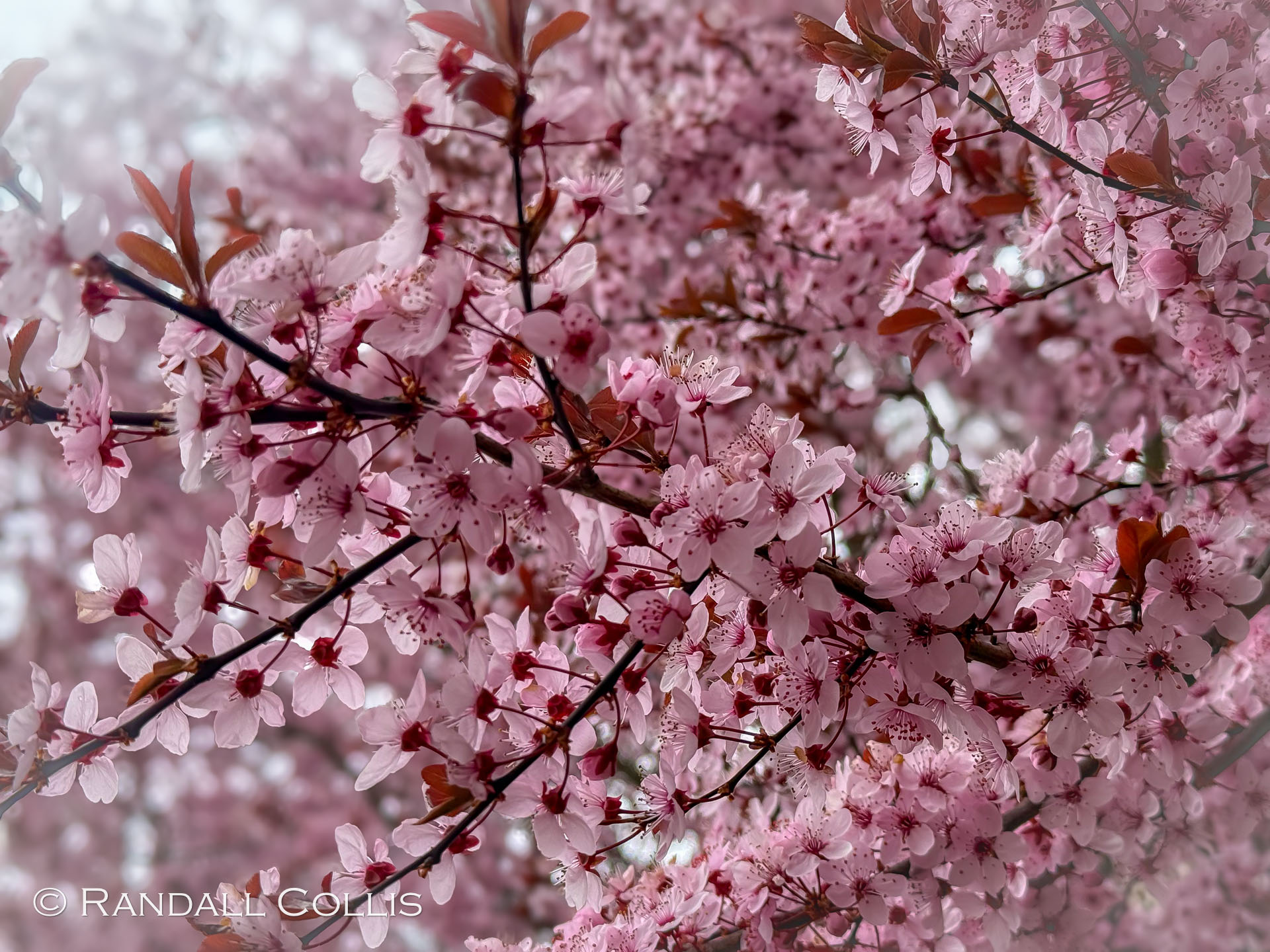
Outside that evening, the trees were already blossoming—spring preparing its own nostalgia.
I sigh at the memory. The days are growing colder and darker now, and I want to stay in that warmth a little longer.
The last bottle is still in my refrigerator. It can wait.


Leave a Reply