
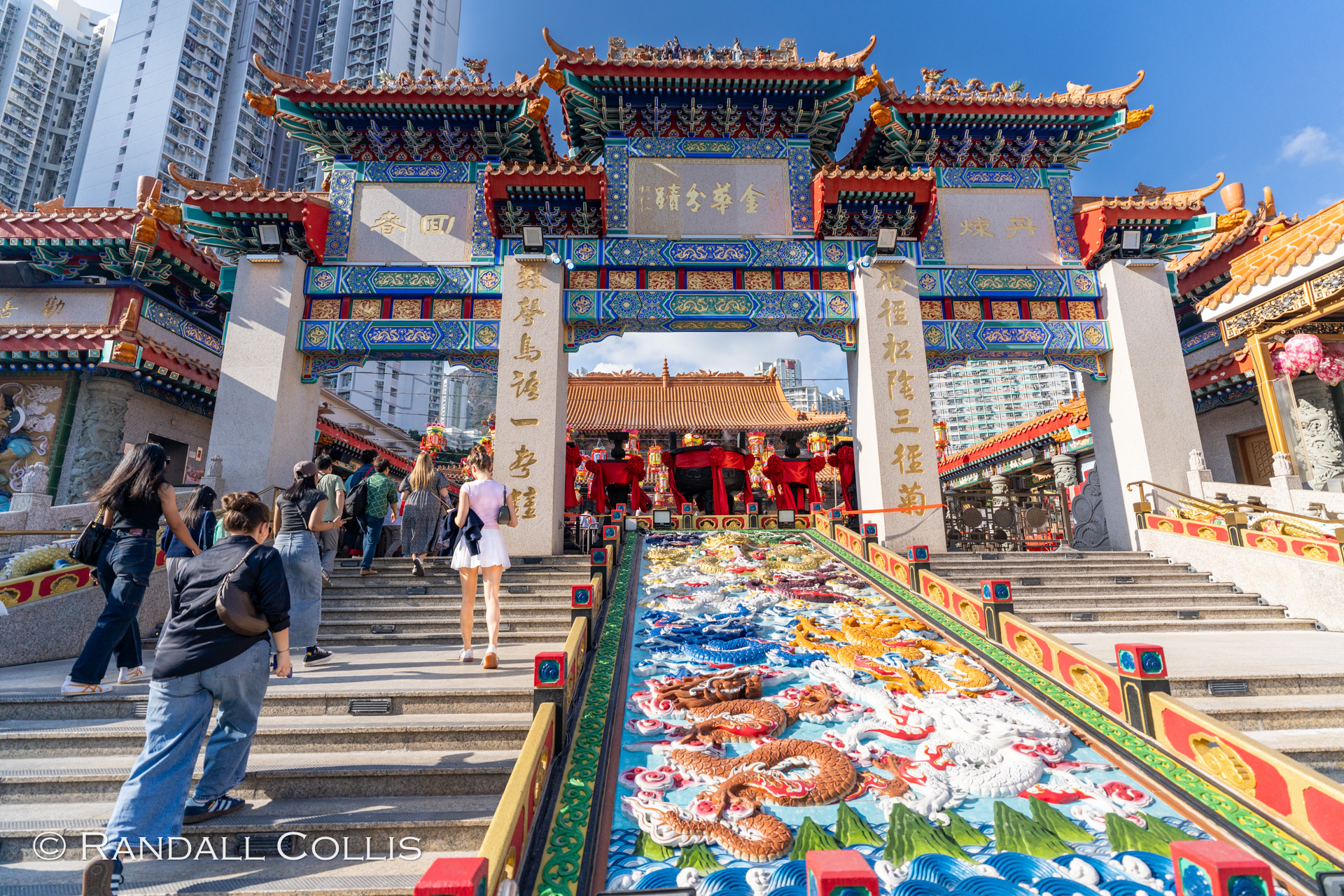
The relentless city buzz clouds my mind and I rub my eyes, trying to clear the haze. Is it the heat, the smell of incense, the rattling sounds from above? I pause outside, at the foot of the stairs, and look up—there’s a pulse of mystery drawing me towards these scents and sounds.
Standing in the sun, I climb the steps and am swept into this sea of devotion, carried with the incense into Wong Tai Sin temple. Nestled between Kowloon’s high-rises, this place blends culture, frenetic history, and people in motion.
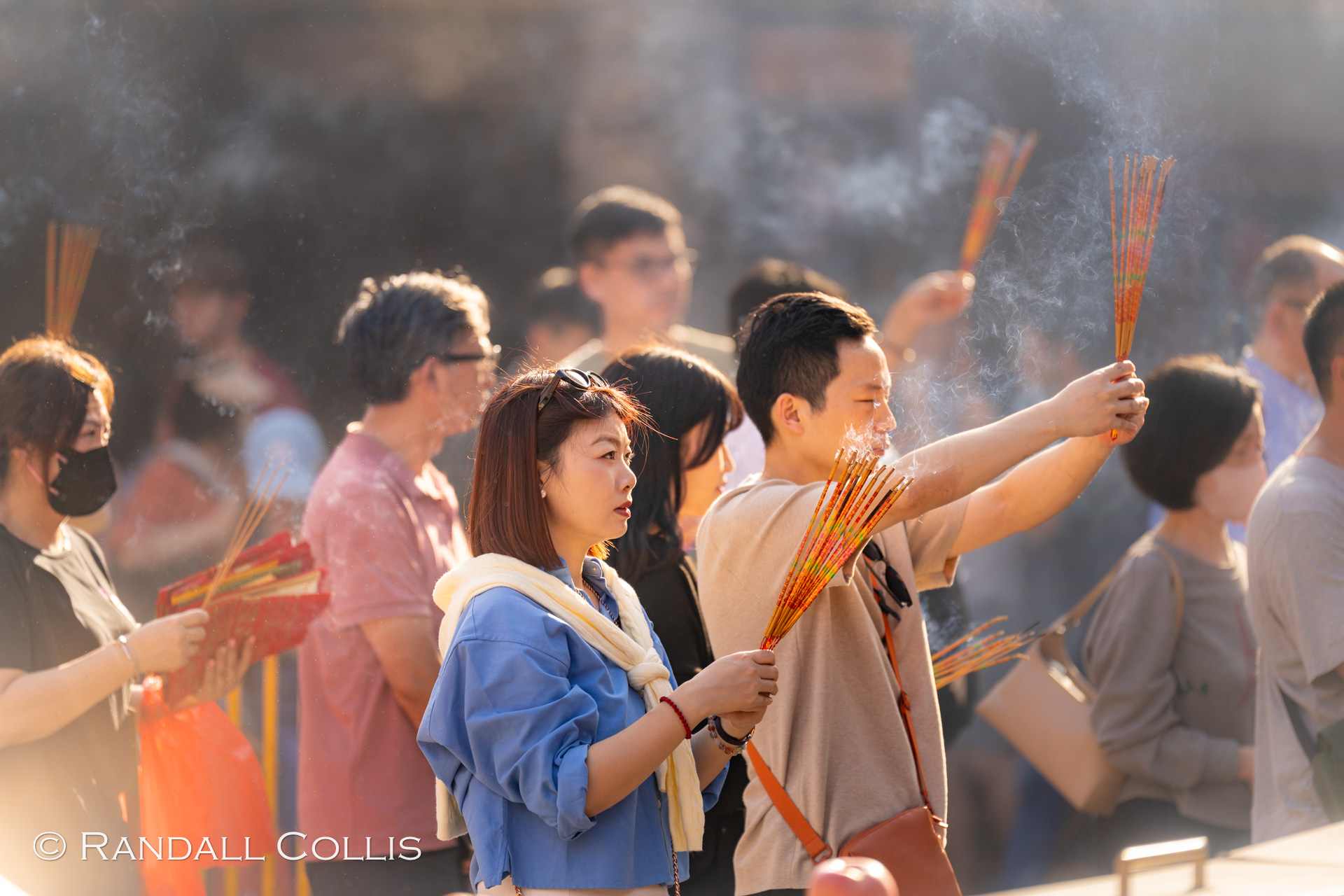
The couple next to me is lost in prayer, incense in hand—deepening this solemn undercurrent of ritual. The cadence—sounds, heartbeats—turns my thoughts inward. I want to understand this rhythm, the rattling of the bamboo kau cim fortune-telling sticks giving answers to those who ask.
Everyone here is naming exactly what they need.
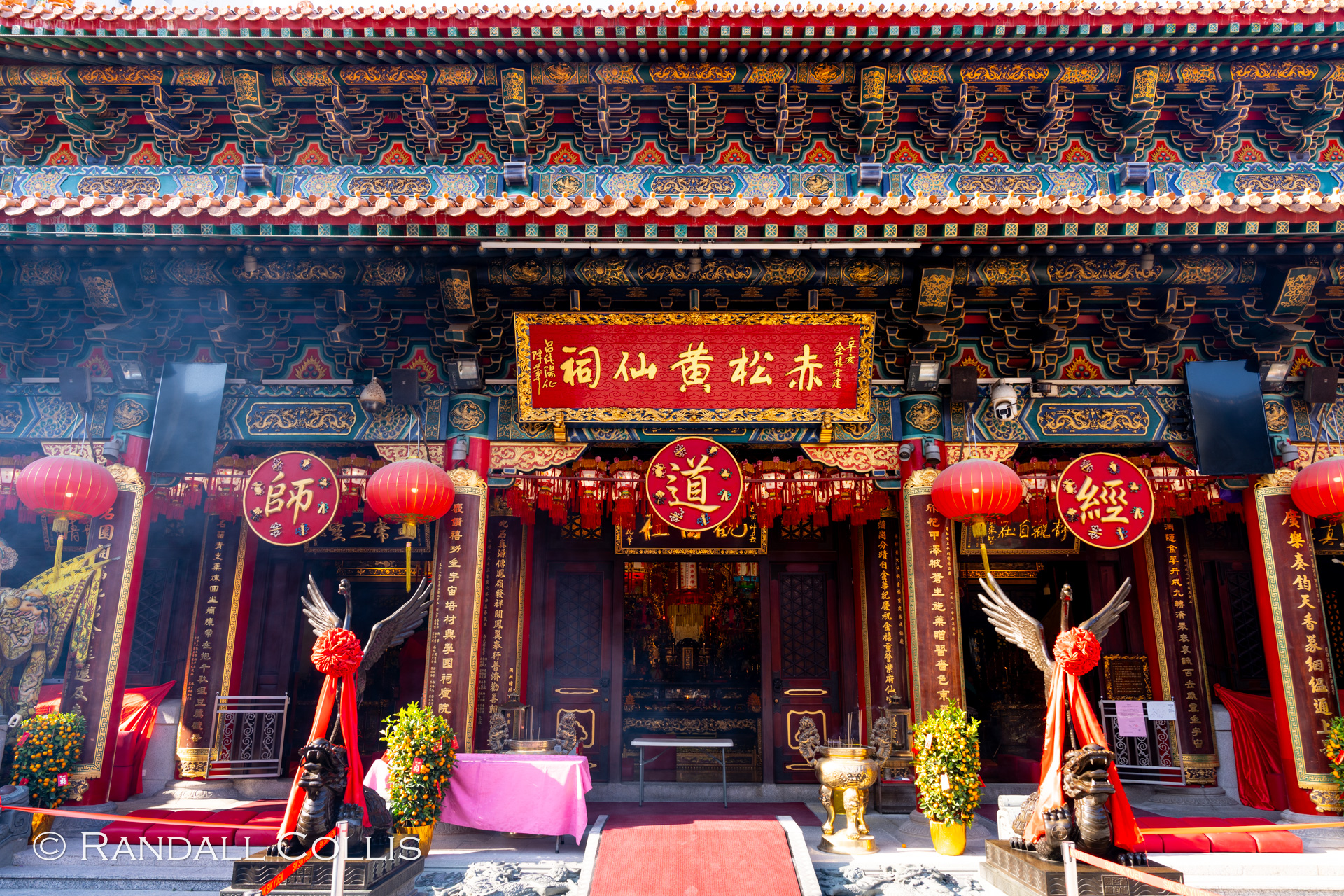
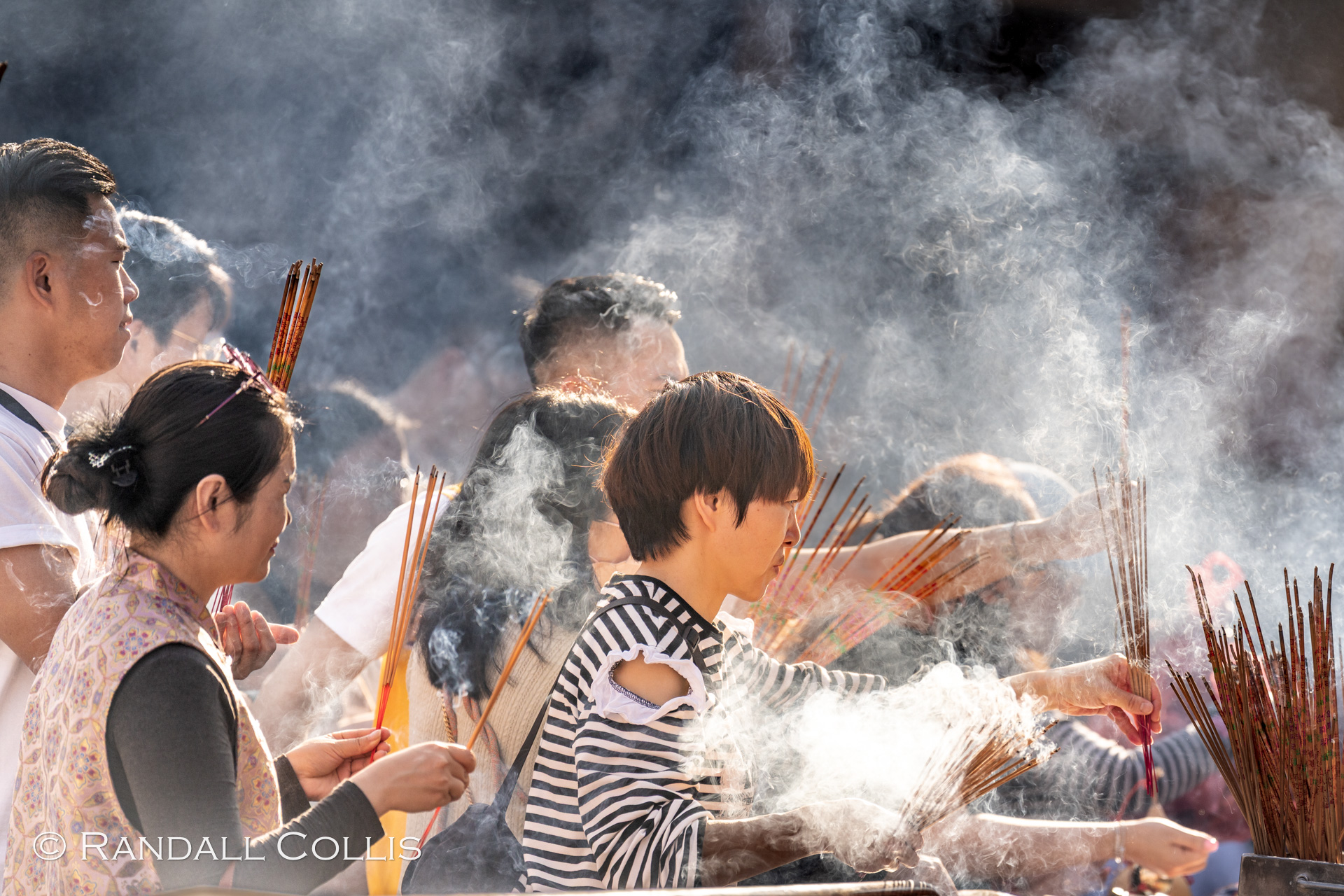
Within the temple, reality shifts. Faces reflect peaceful, controlled chaos: a contradiction that leaves me uneasy, camera in hand—an outsider fascinated by rituals I don’t fully believe in but hold pieces of philosophy I live by.
Intimate scenes fill me with wonder, and while part of me wishes to disappear, the rest wants to wrap itself around such moments—to discover what it is I’m looking for. This Daoist temple speaks, and I let Laozi lead the way:
“Ever desiring, one can see the manifestations…”
I raise my camera and begin framing.
The scene unfolds as a slow composition—silence and devotion set the rhythm, my camera playing along, capturing small pieces of magic.
In the eyes of devotees, there’s simply intention—their heart behind each wish. They hold onto a glimmer of hope: tomorrow, things may shift, and their wishes may be granted. I hesitate, seeing it within me as well.
“Ever desireless, one can see the mystery…”
I lower my camera and allow myself just to be here.
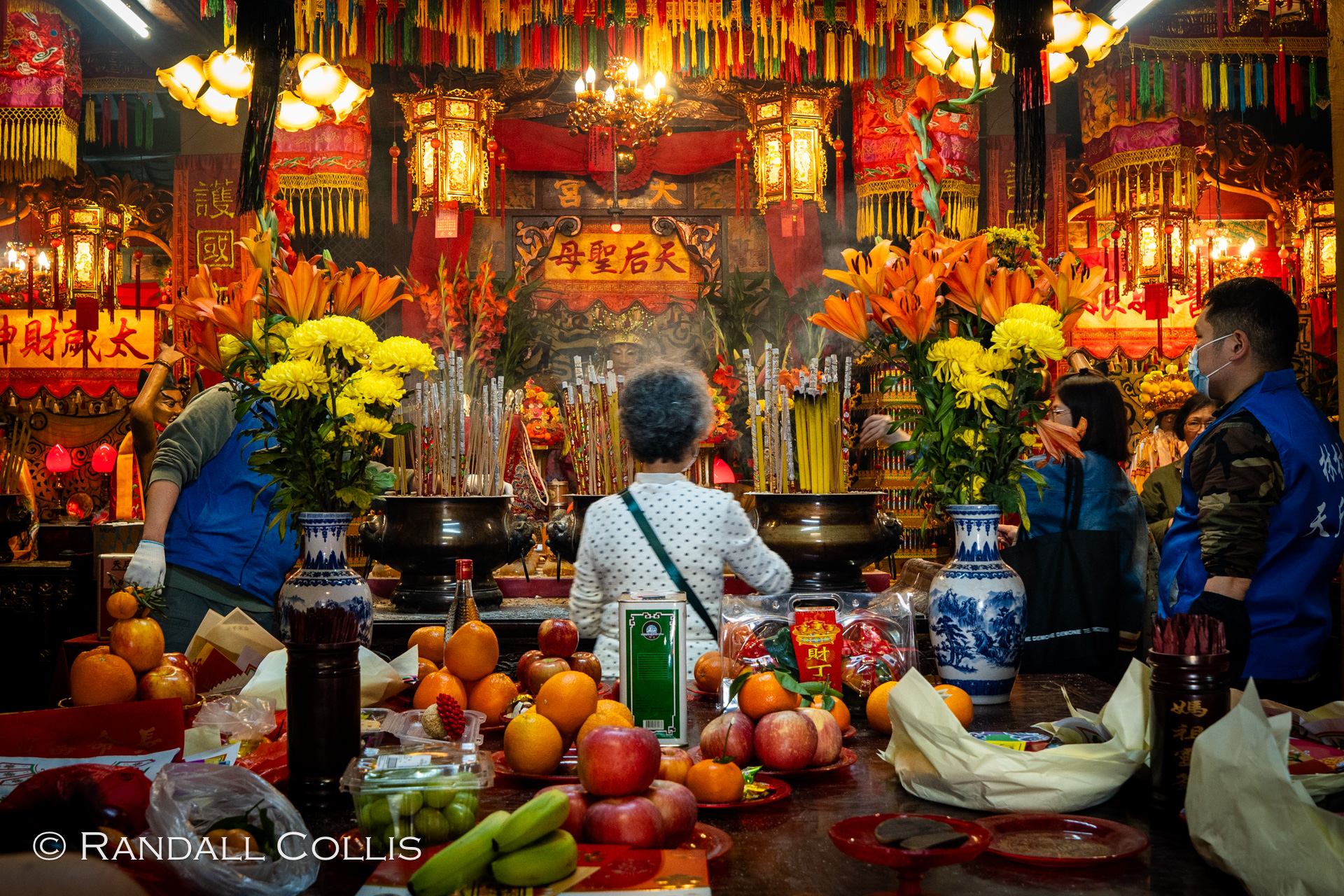
The incense thins as I enter the courtyard. Kau cim fortune-telling has always left me confused, and here, I feel it even more. My western mind gets the gist: the comfort of hope; the naming of what’s needed. Yet does placing the responsibility for the wish on a higher entity—one I’m not sure exists—free us from responsibility?
Isn’t it the inspiration of the act, where, returning to the streets and its hardened reality, the mind and body must make it happen?
Taking action is my choice, my belief. Shrouded in incense, I ponder—these people aren’t debating their beliefs, they’re living them as the Way intended, no explanation needed.
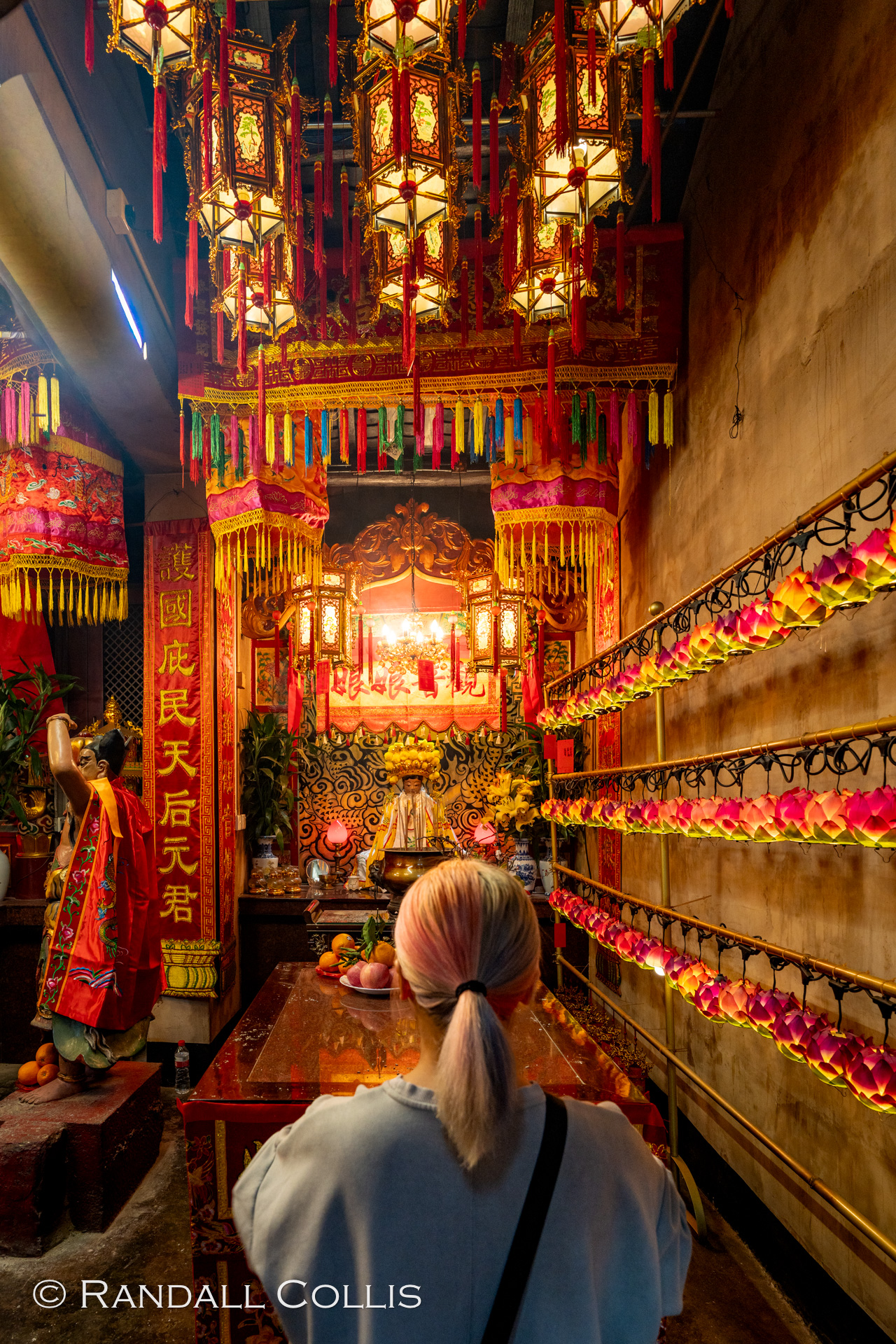
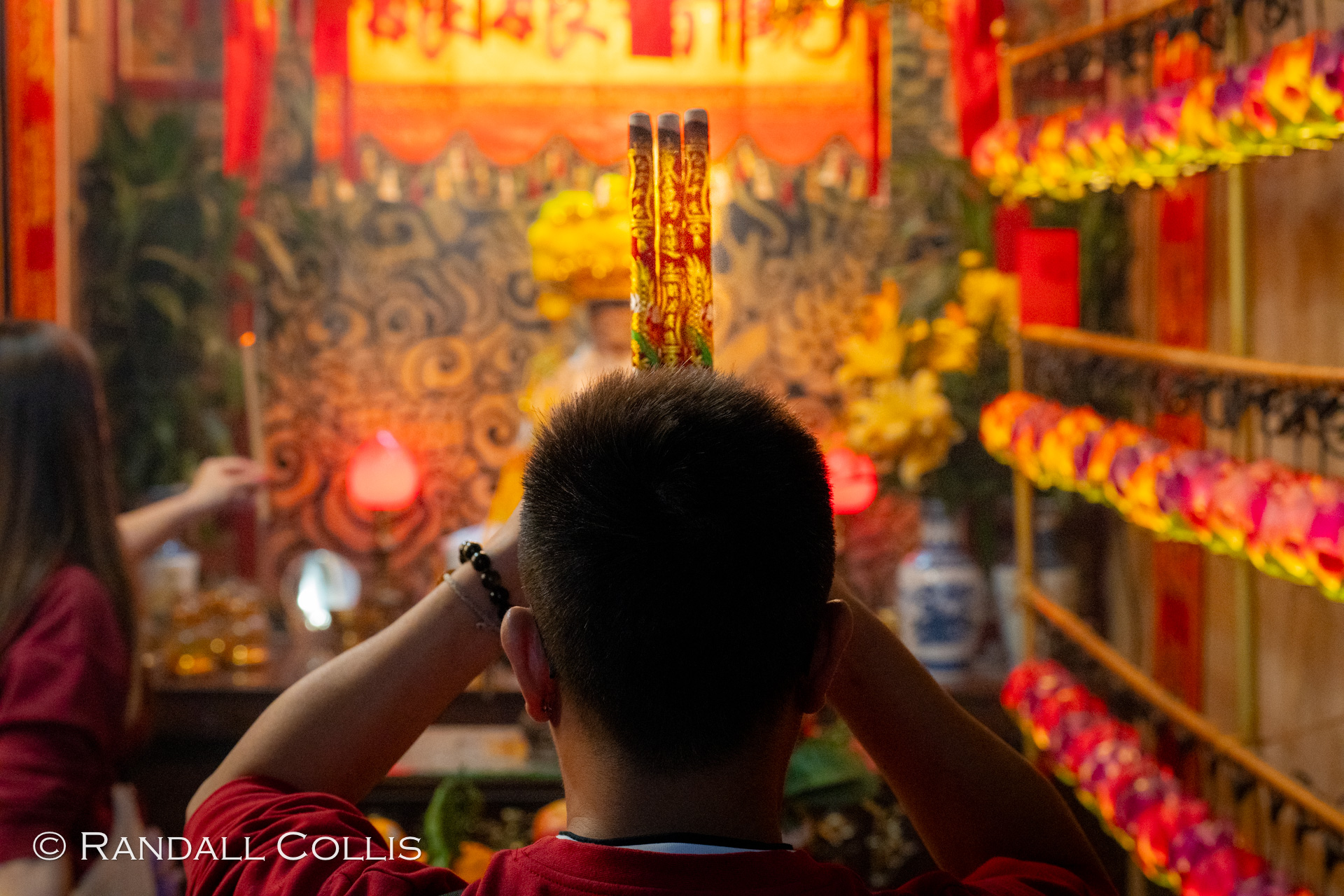
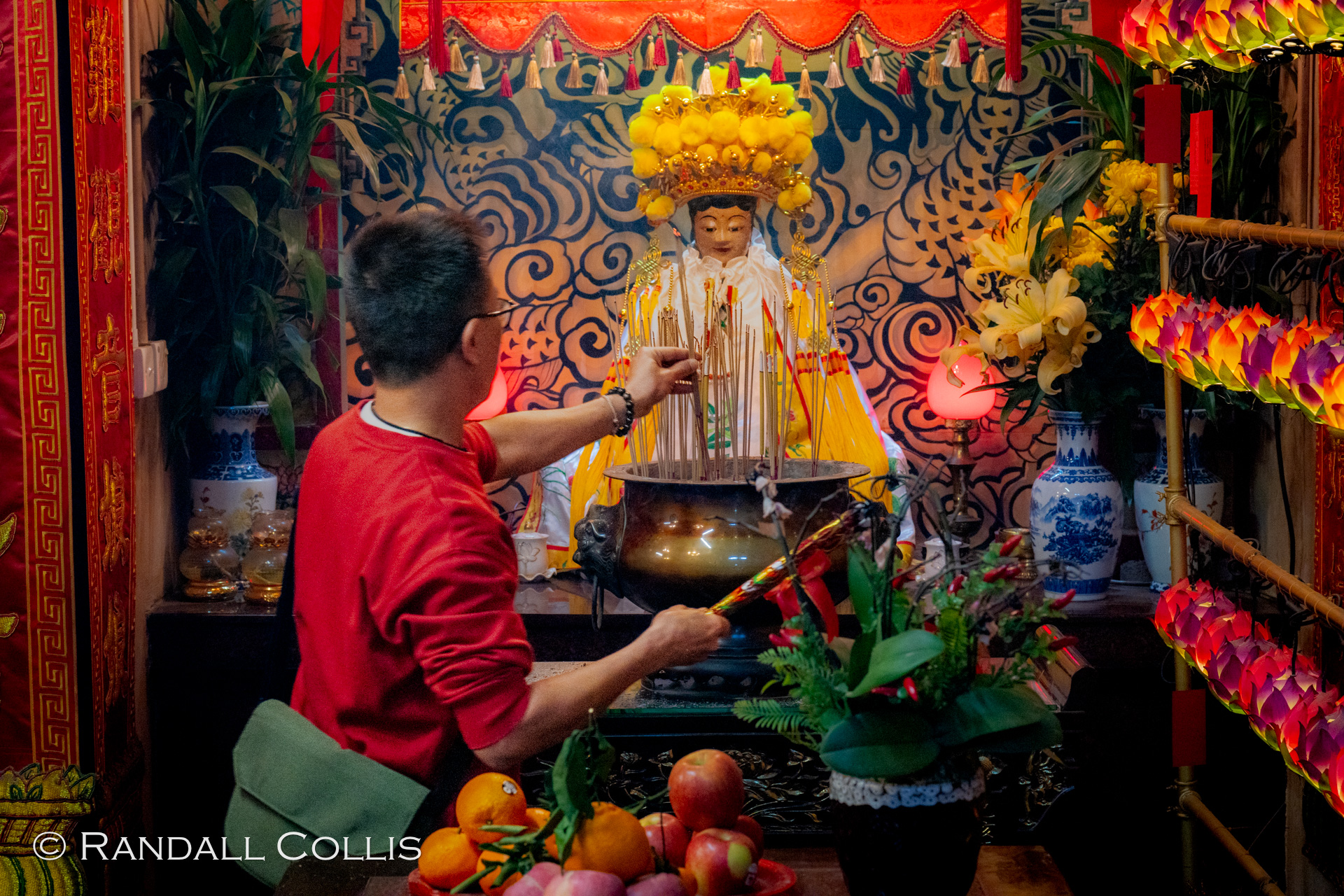
I glide through the temple, observing silently, and come to a shot I’ve been looking for: “Please hold the incense a little higher…” I think to myself, allowing the smoke to wrap around her head—the glow of the lights, the smoke, the hair—this is the shot I want—but she’s oblivious to my request, so I snap a few quick photos and quietly back away.
I’m excited to review the shots on my LCD screen, hoping a little magic will show itself—nope. I’m disappointed; the photos didn’t hit the mark or capture the essence of my feelings.
I sigh and put the camera down by my side with understanding. It’s the way things are:
“The farther you go, the less you know.”
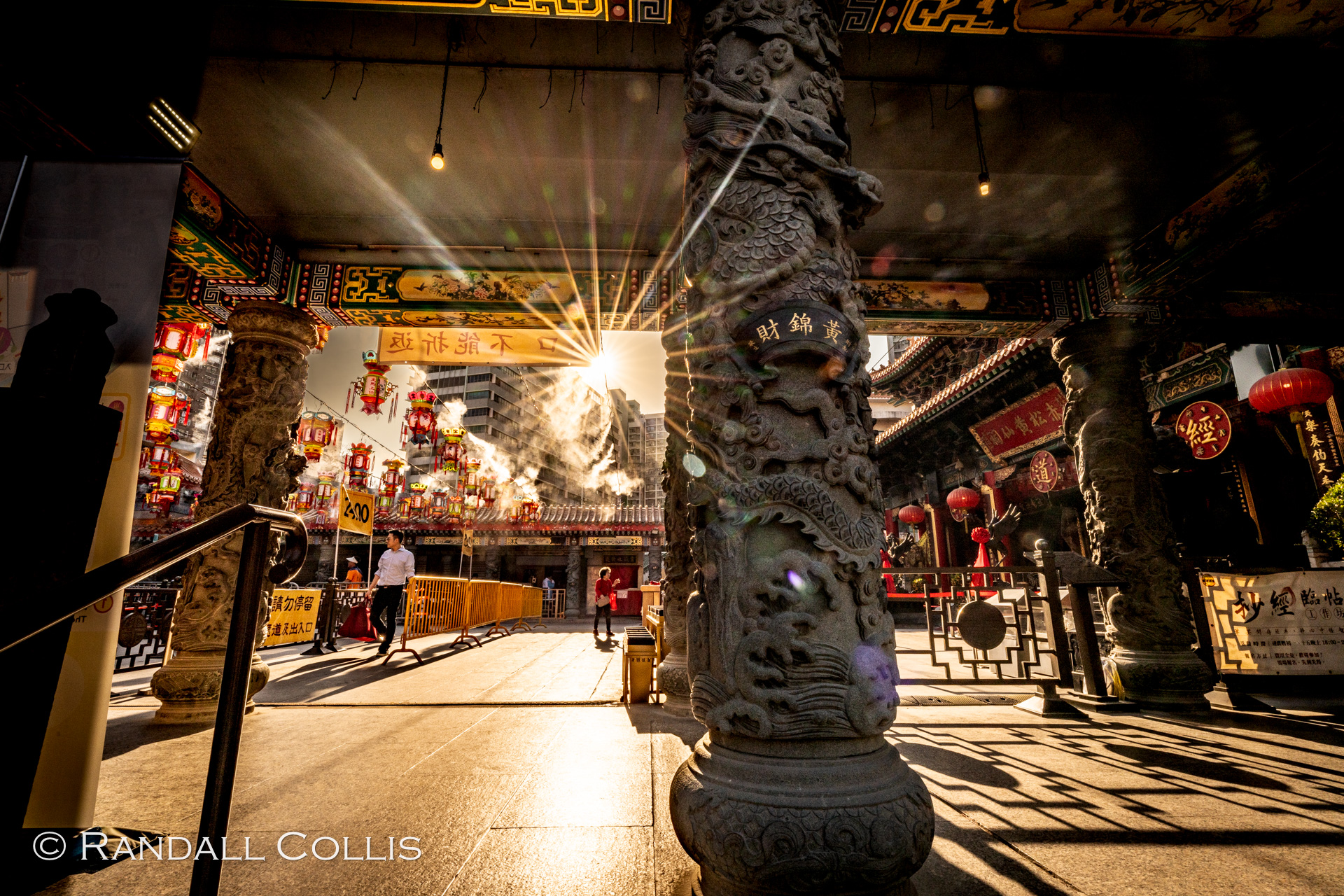
The late afternoon light begins to trickle in. I look at my watch and know it’s time to go: another destination, another adventure, another beginning. The final group of devotees pours out of the temple as it closes for the afternoon—just like that, it’s over.
Undeterred, I attempt to take a few more shots, but security moves me along, and before I can ask for another minute, I see a family praying before a small temple, being corralled and told to move along as well.
I smile… aren’t we all just trying to get in one more wish, one more shot, in the hope it makes a difference.
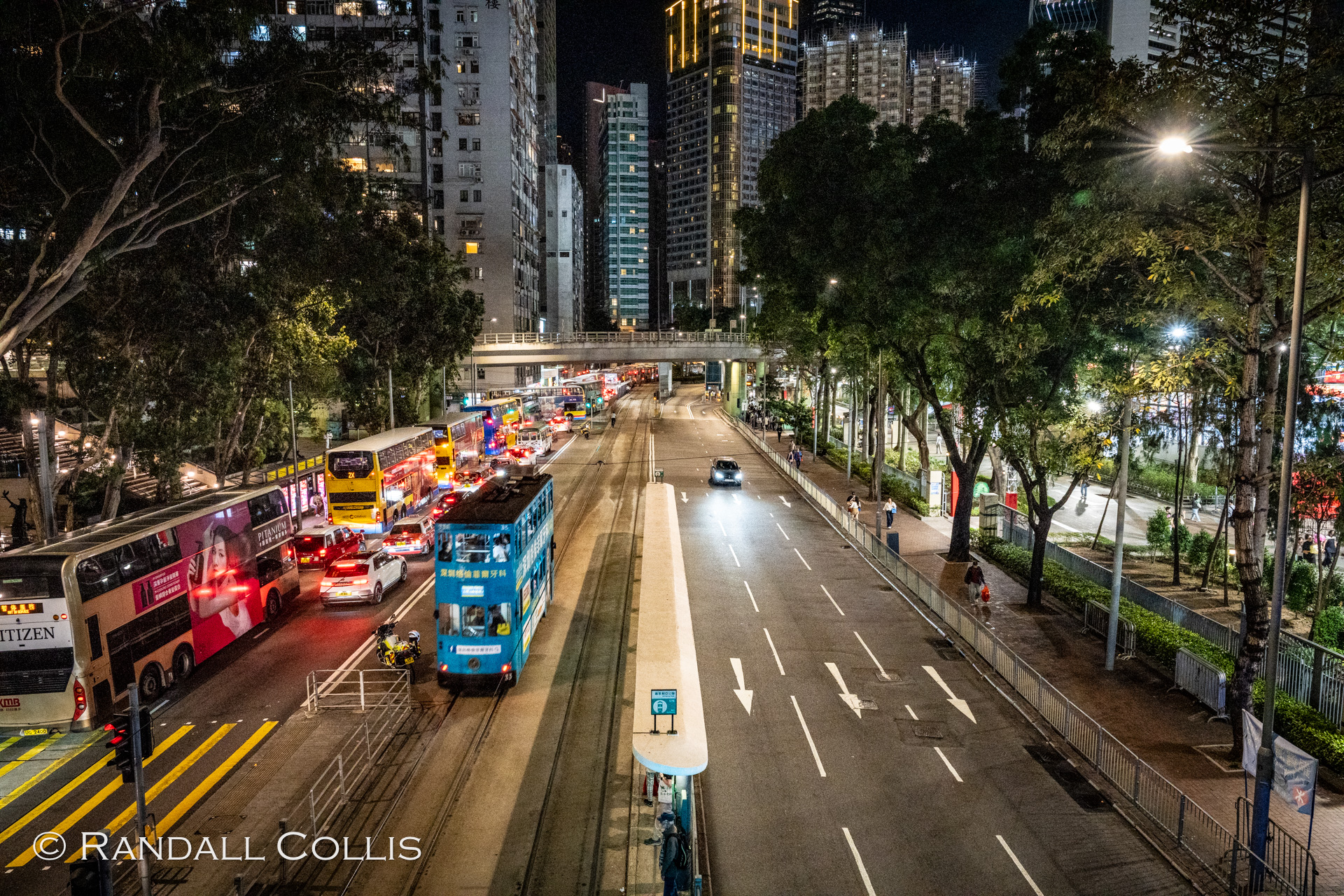
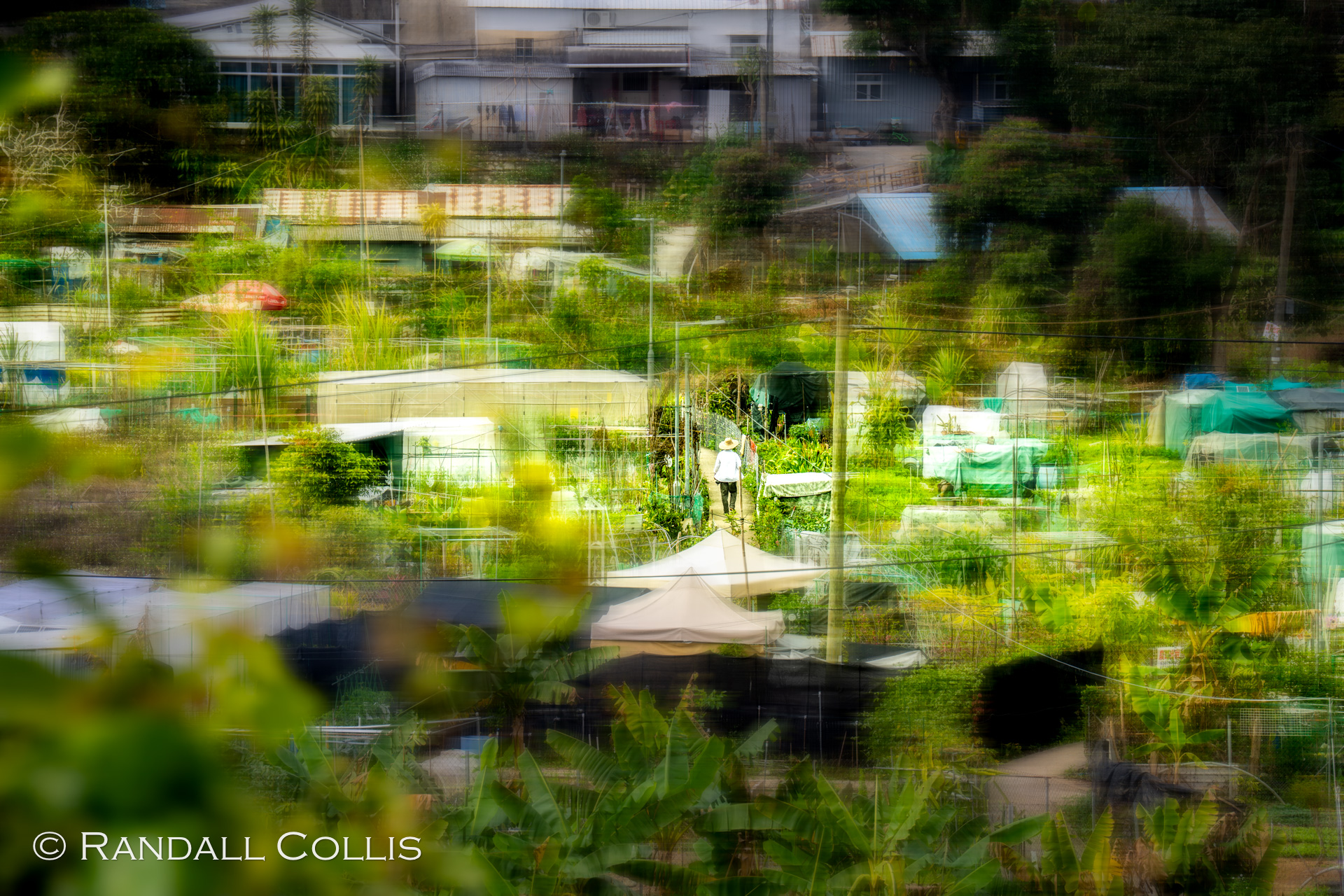
Exiting the temple, incense lingers—reminding me of the enchanting atmosphere I’m leaving behind. Turning to my next destination—a journey to the countryside in the New Territories and Lam Tsuen village—I carry this reflection, feeling I have all the time in the world.
Navigating Hong Kong is an underrated pleasure; an efficient transportation system allows me time to dream. Leaning back in my seat, I look out the window as the day blurs past—I drift from one scene to another—from a concrete jungle of tension to a green countryside of ease.
Inhale. Exhale. I’m exactly where I’m supposed to be, and I close my eyes.
Laozi says the Way returns—things flourish, then return to their root, and between these two temples, I’m somewhere in the returning.
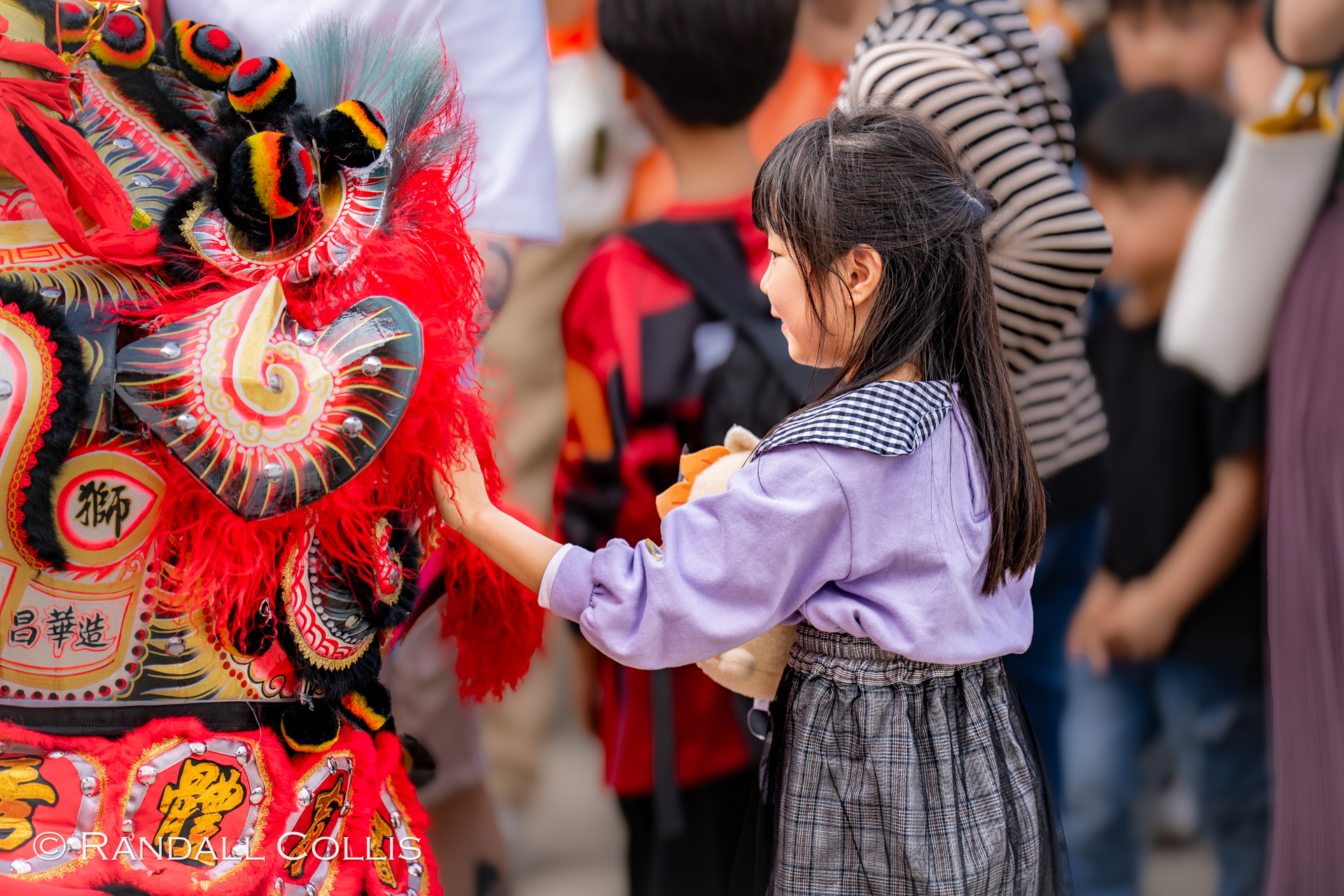
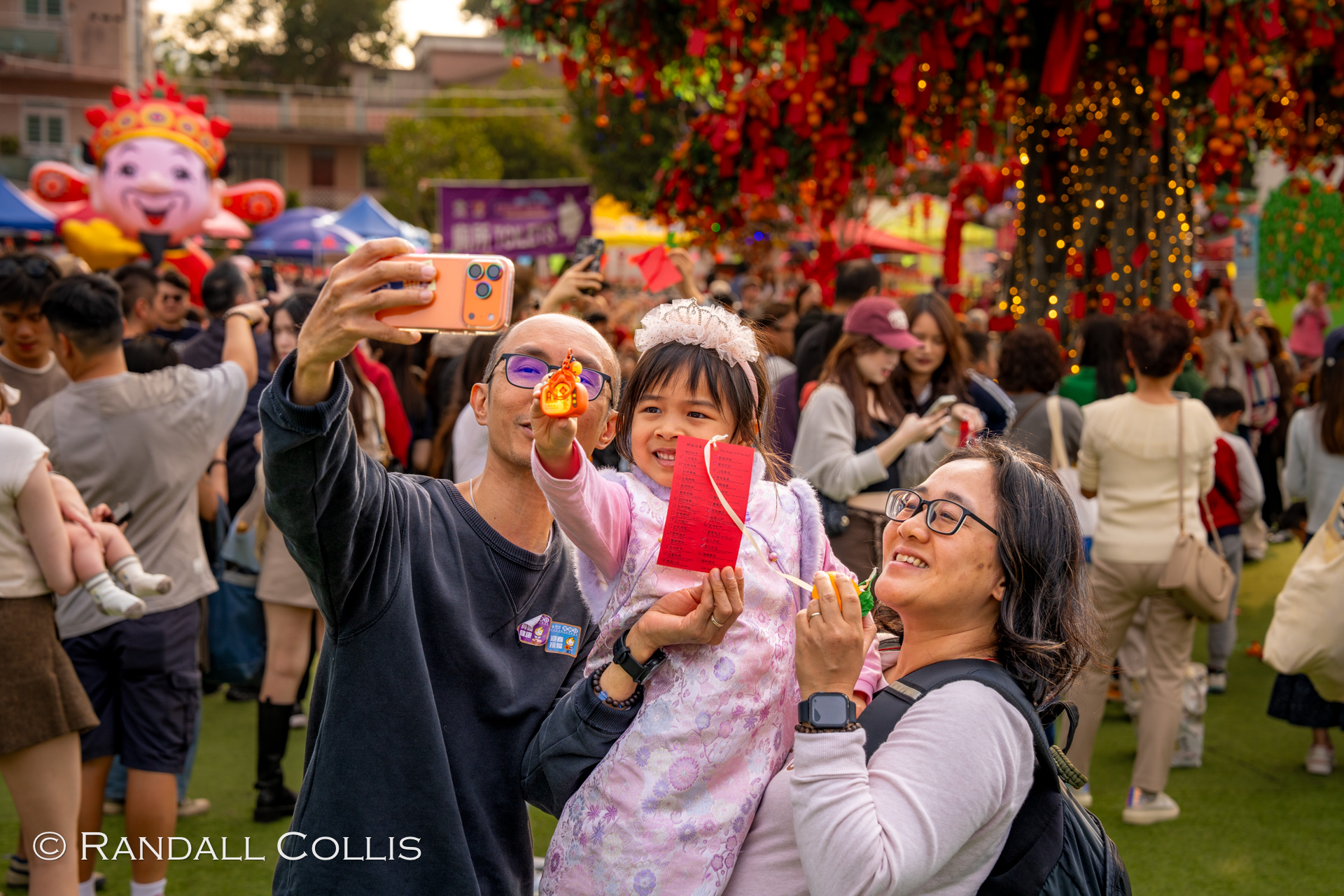
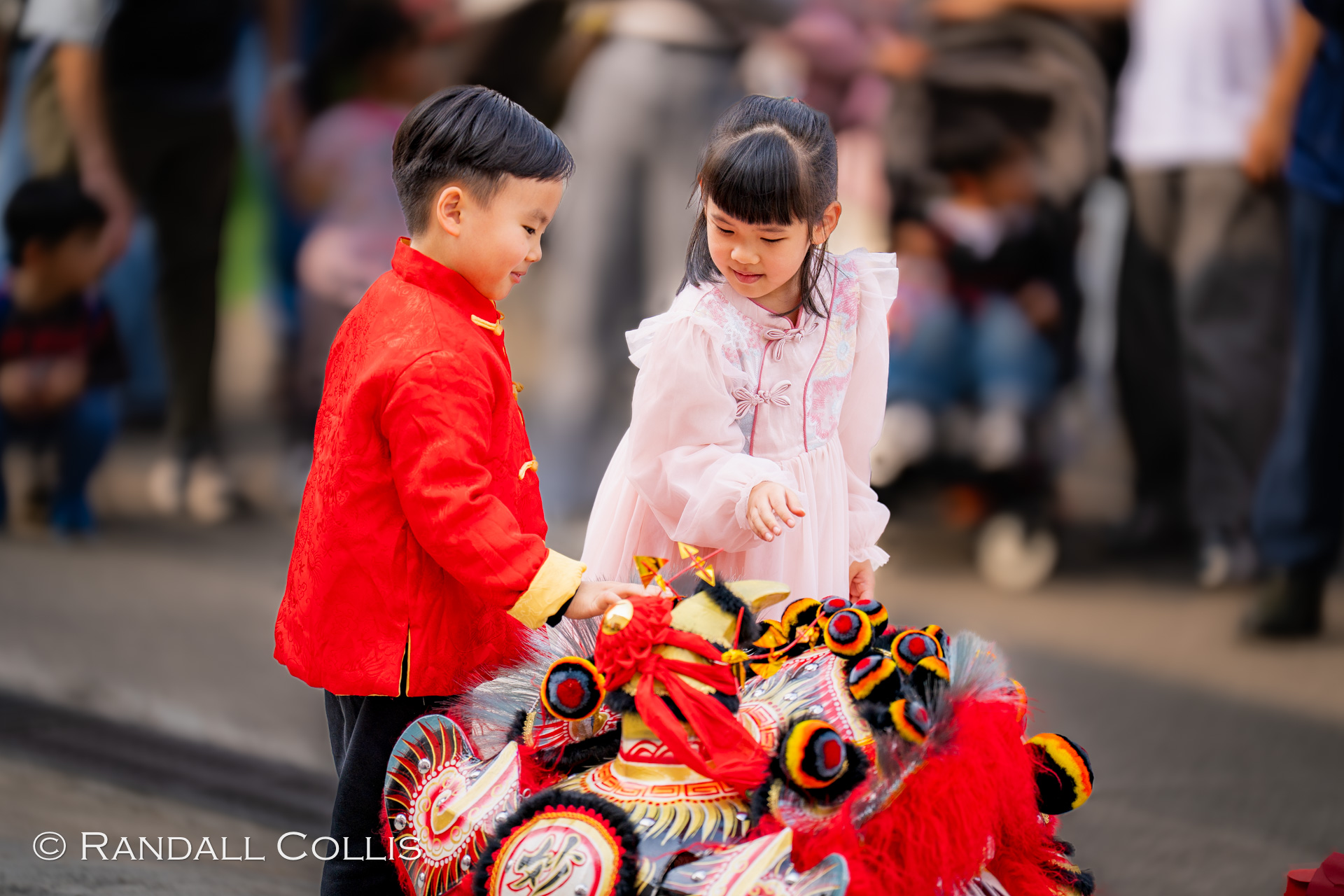
Stepping into Lam Tsuen, the ambiance could not be more distinct. Fresh air and space, along with indecipherable chatter, create a richer tempo here—the feel of a carnival. The pulse of the day quickens. A switch has flipped, and on the surface, solemnity has been replaced by levity.
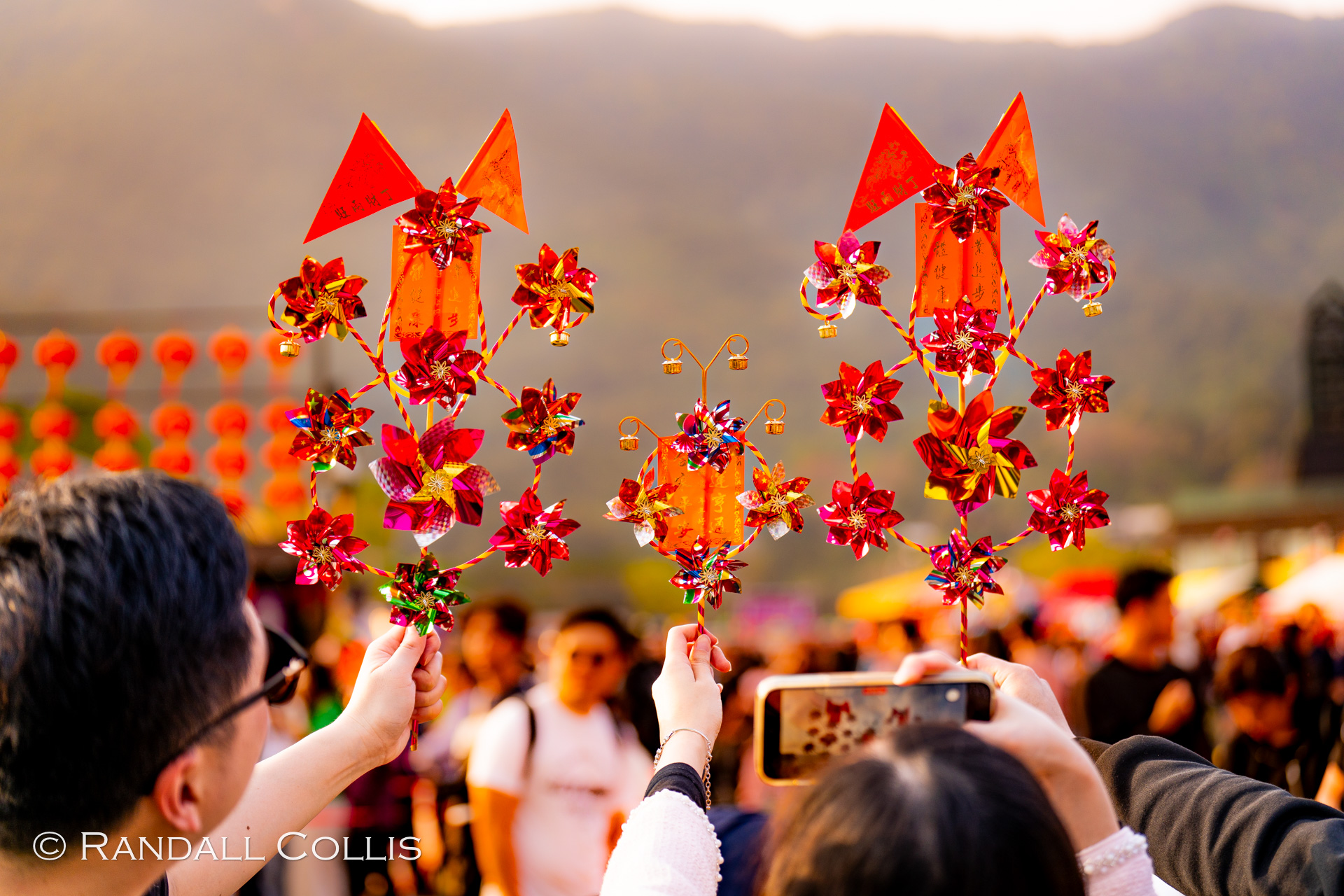
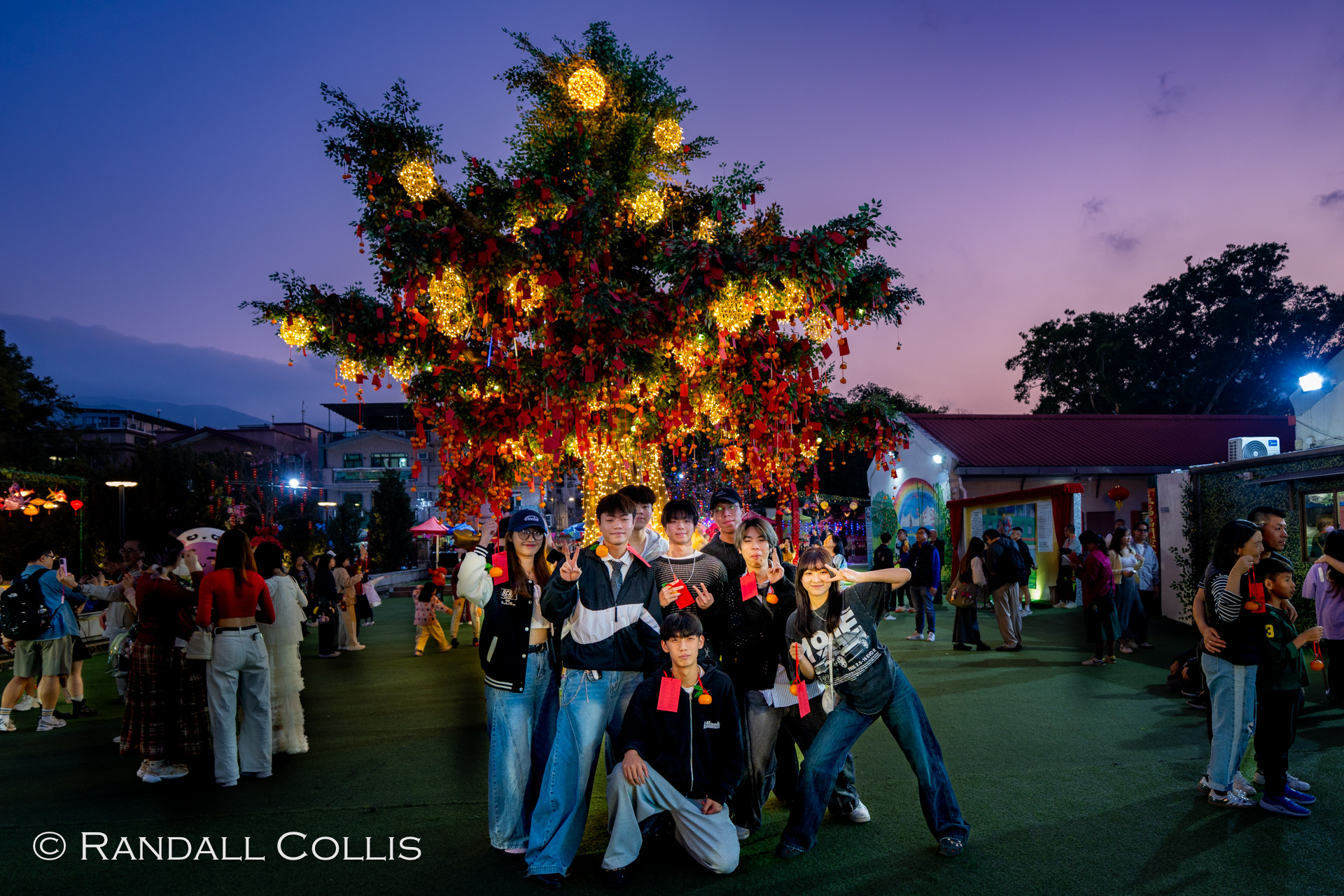
No silent whispers of wishes here: instead, they are proudly written and boldly exclaimed, thrown with gusto for all to see. Here, a plastic orange with a red string, attached to a placard where wishes are written, waits to be thrown.
My instinct is the same as at the temple—step back with my camera and disappear from the scene. This is quickly proven impossible—two young kids come up to me, and soon I’m laughing, writing my wish of health and happiness for friends and family, and launching my orange with the hope it lands as high up in the tree as possible…
On my third try, I succeed and am met with laughter and approval. I can imagine a Daoist sage smiling—follow the laughter, and the Way follows you.
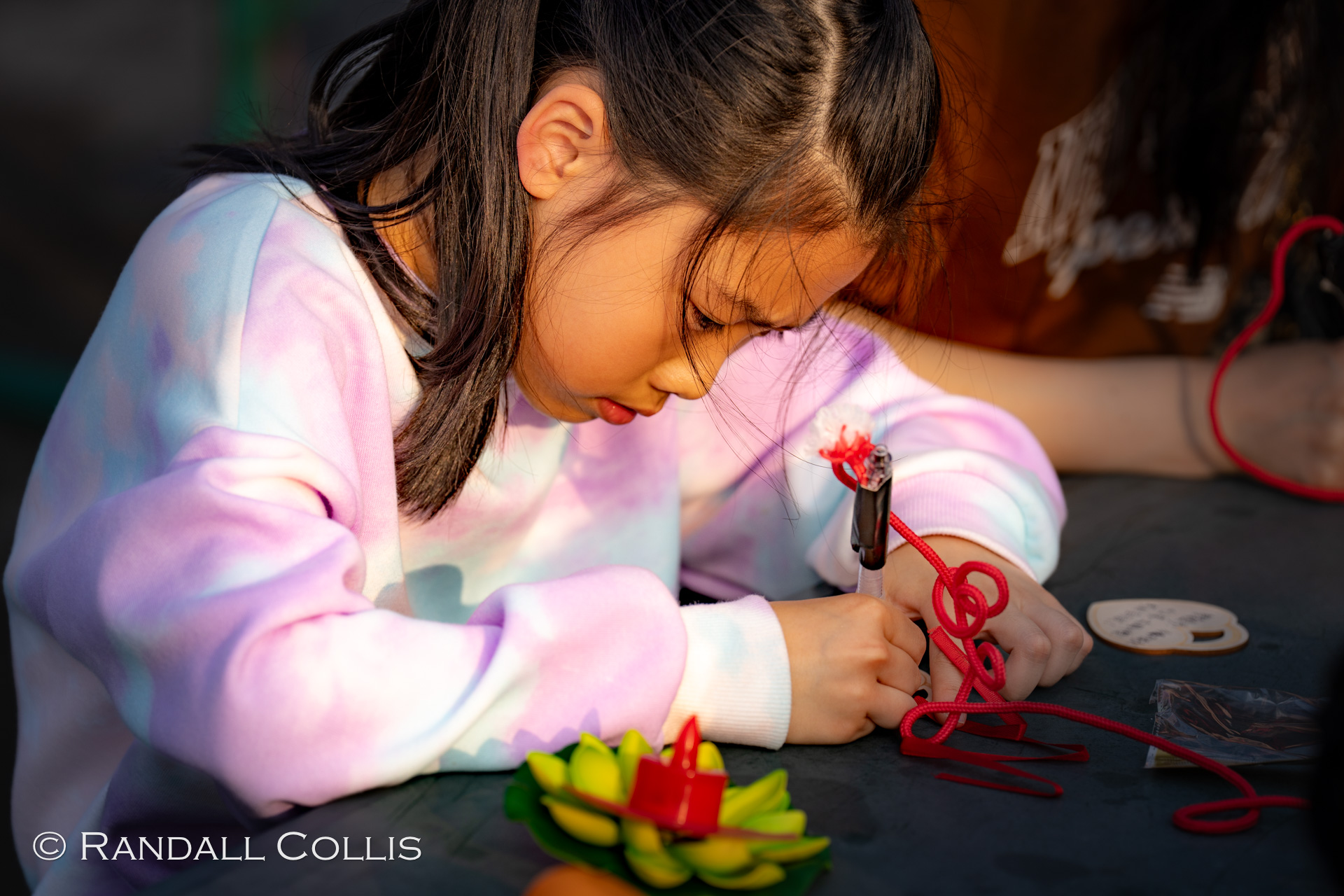
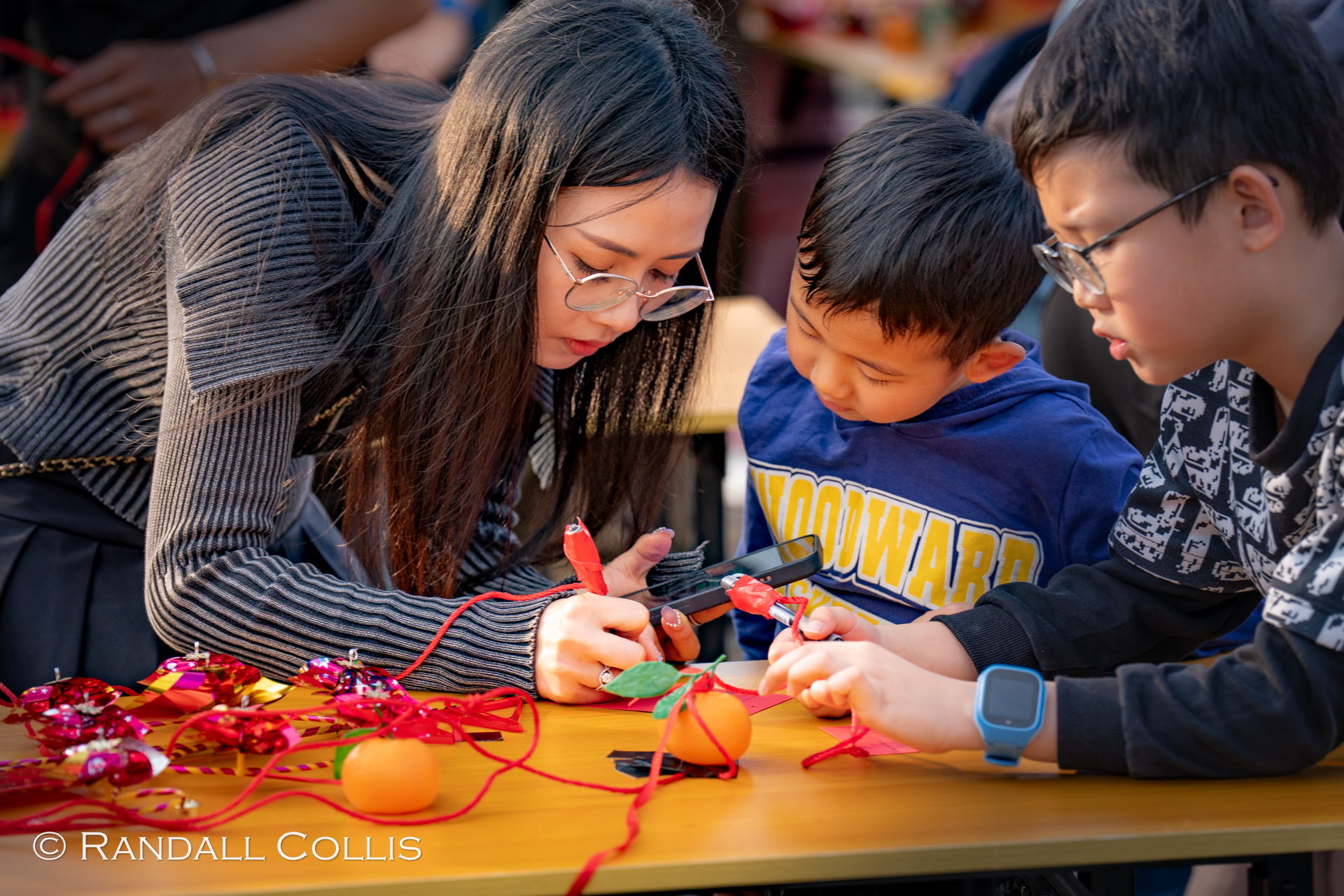
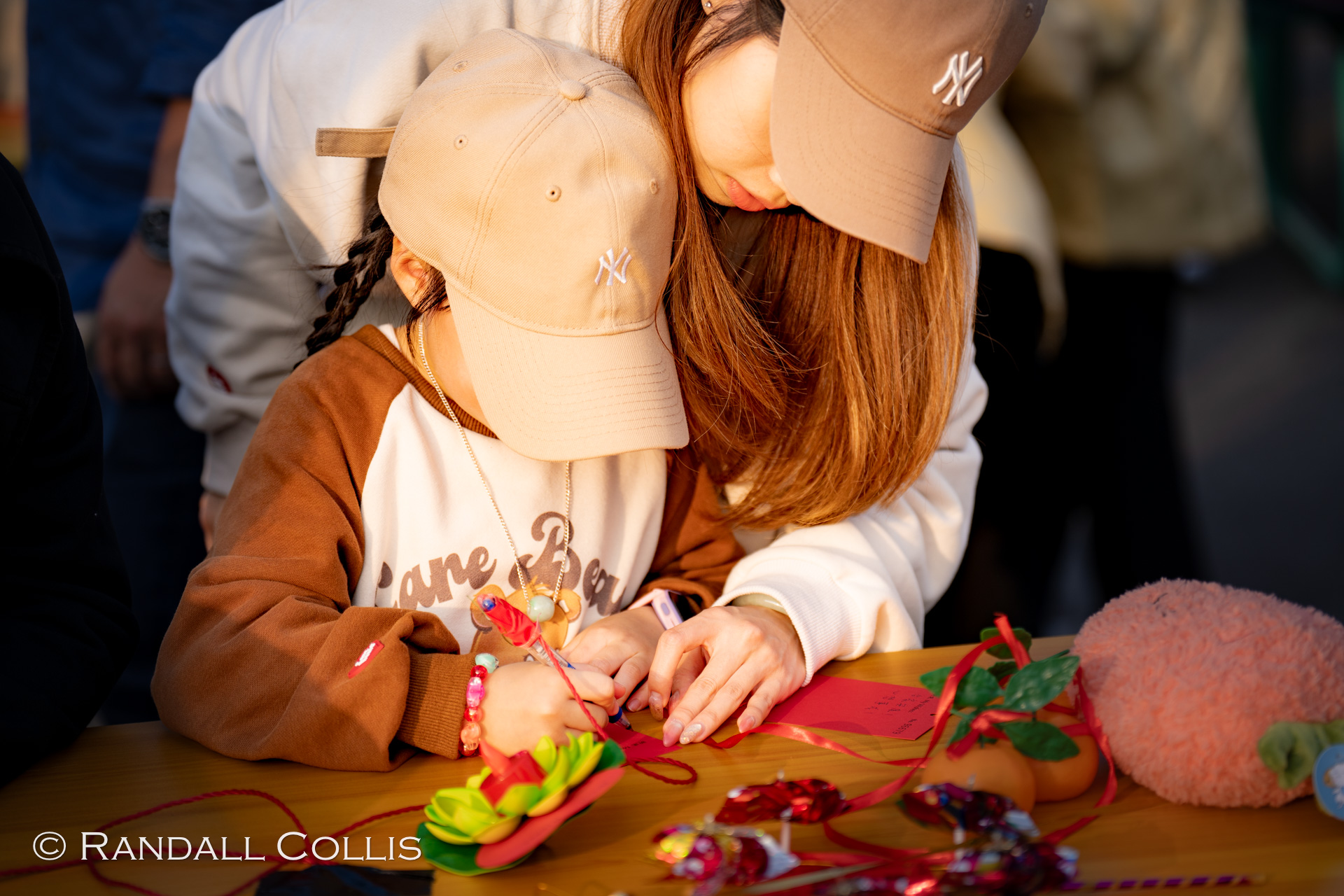
The contrast between Wong Tai Sin and Lam Tsuen is incredible: one enshrouded in the mystery of its sacred rituals, the other exuberant, where the greater the gusto, the greater the reward. On the surface, it’s difficult to see any connection, but beneath all this joy and brightness, there are still the same undercurrents and questions I witnessed at the temple:
Will everything be all right?
I feel the tension for some of the kids as they sit under their parents’ eyes writing out their wishes—mothers peering overhead, making sure the characters are written correctly, ensuring the wish will be received from above. Parents, even while keeping the moment light, are the ones with heightened fear.
The difference here is that the tension’s wrapped in festival colors, making it possible for even fear to laugh at itself—understanding, in the end, both wishes and worries share the same root.
Standing amid all the color, I’m reminded of Laozi’s advice:
“Hope is as hollow as fear. Hope and fear are both phantoms.”
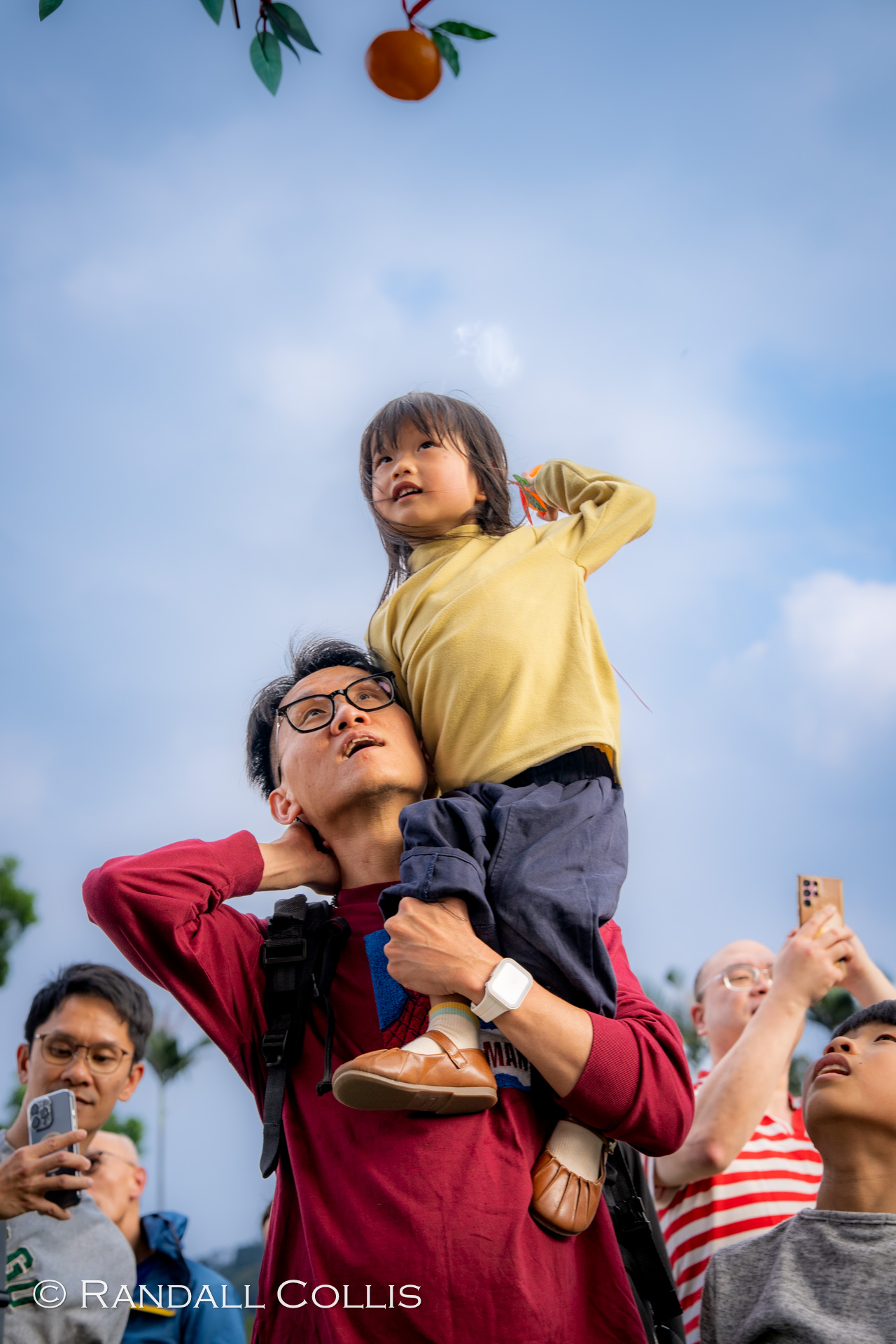
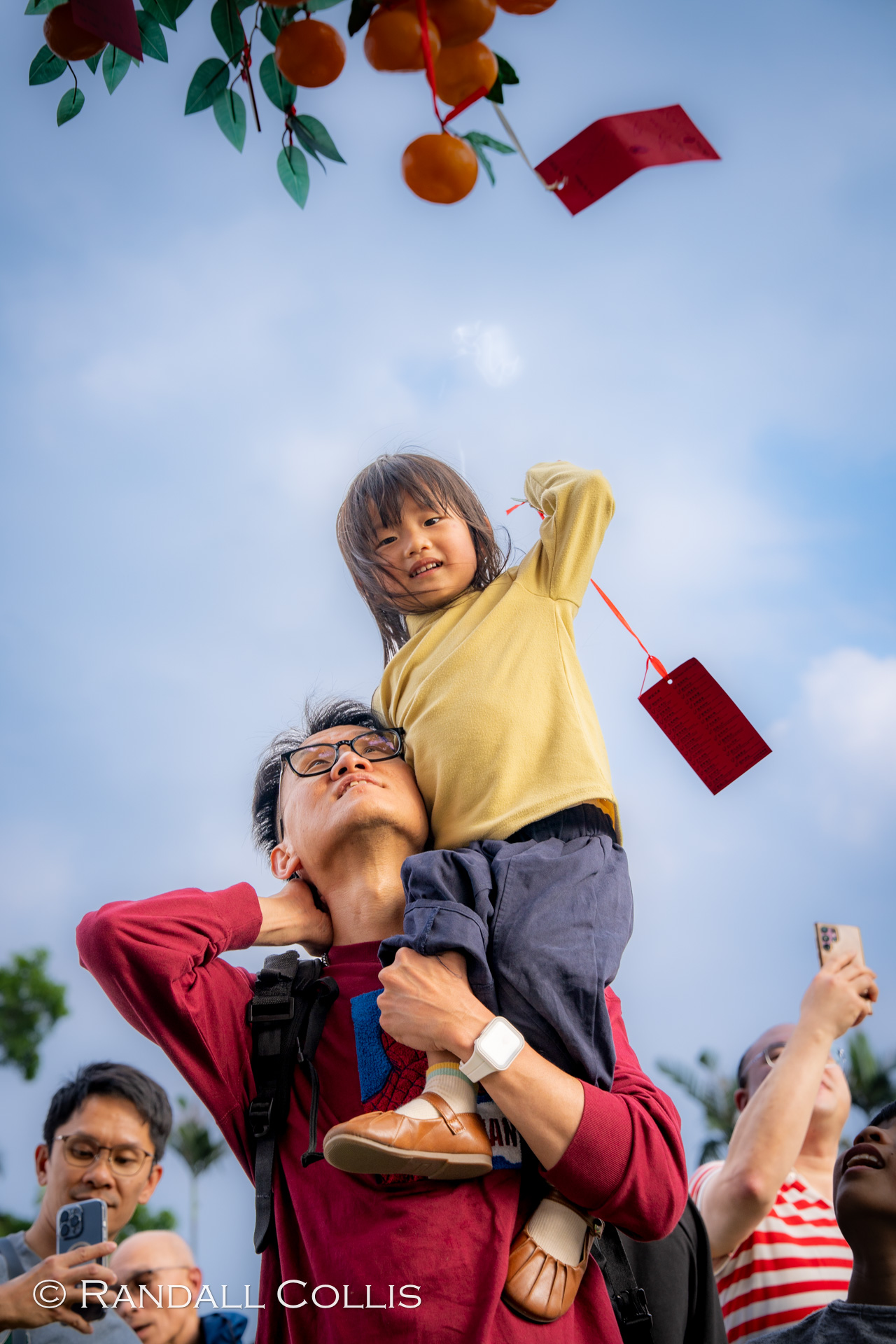
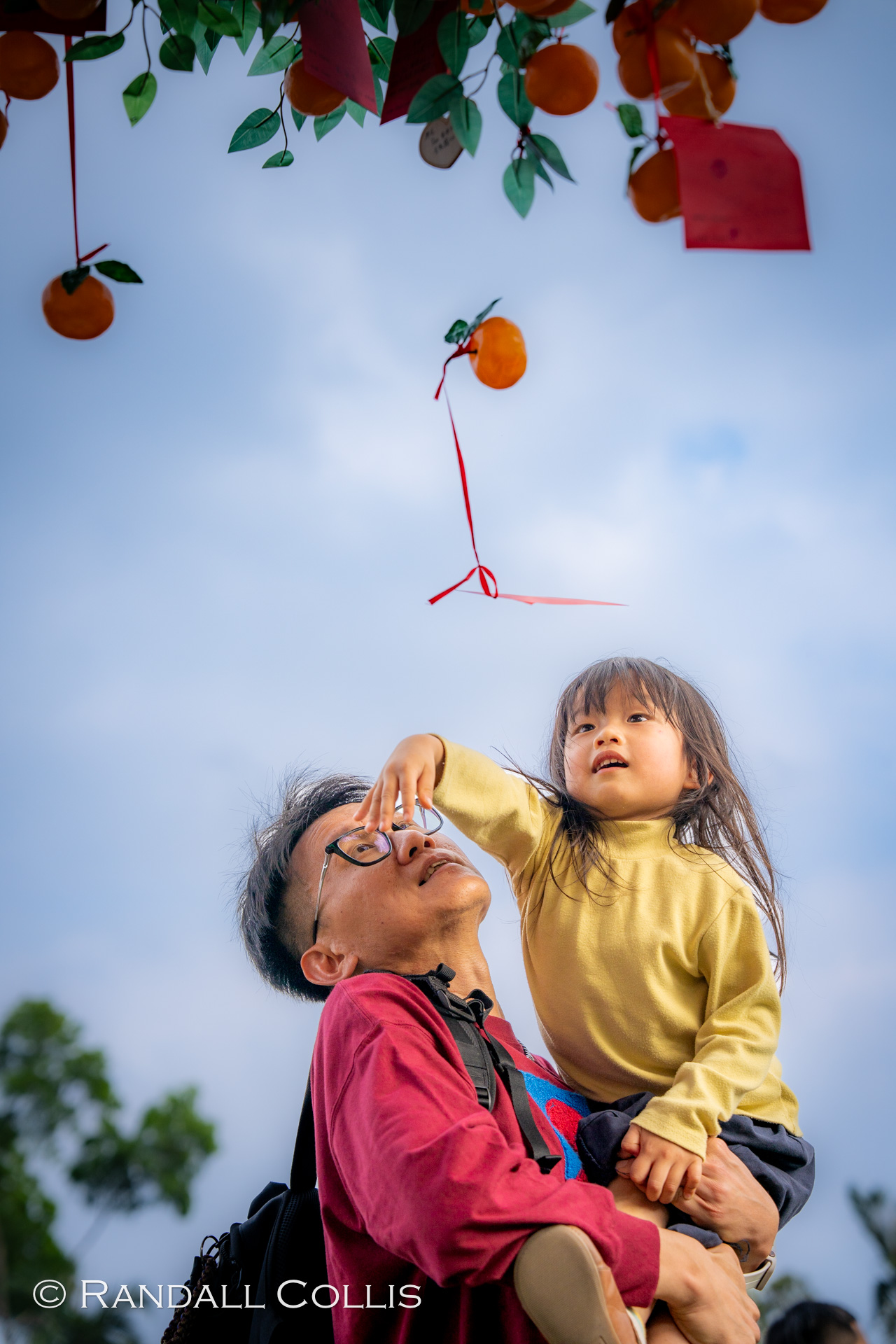
I shoot the laughter, the misses, the kids looking at their photos on my screen. A community celebration, and all are invited.
I hunker down at the base of the tree as a father shows his daughter how to throw and hoists her on his shoulder. Within all the outward happiness, there’s a glimpse of drama—my heart wishes her success.
Her first try falls way short, landing in the dust with a small, comic thud. For a moment, she looks stricken—but then laughter breaks out, and she scrambles down to fetch the orange and try again. And again. And again… She finally finds success, but we’ve all lost count of her pure attempts.
She may not fully understand it yet, but she’s already won.
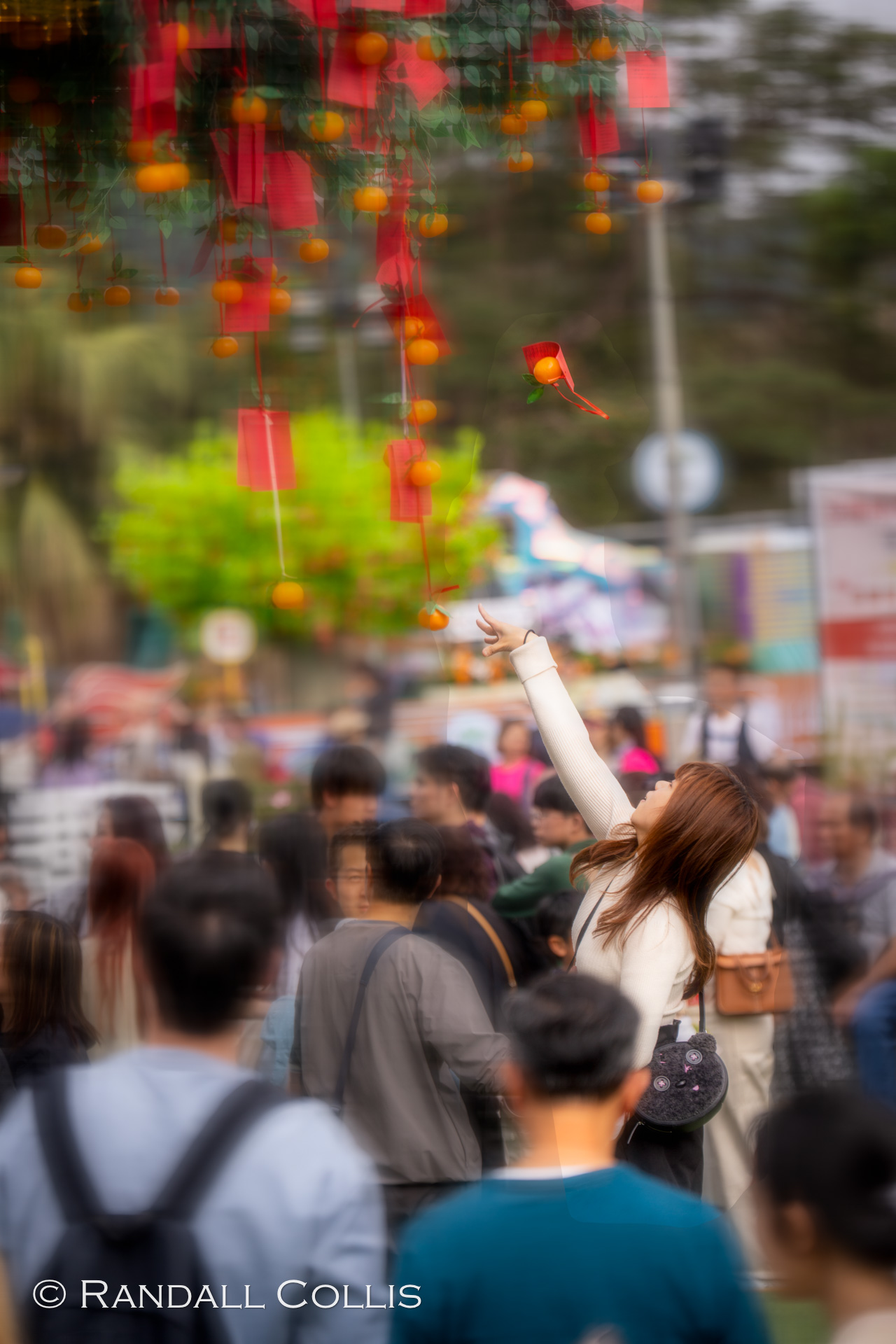
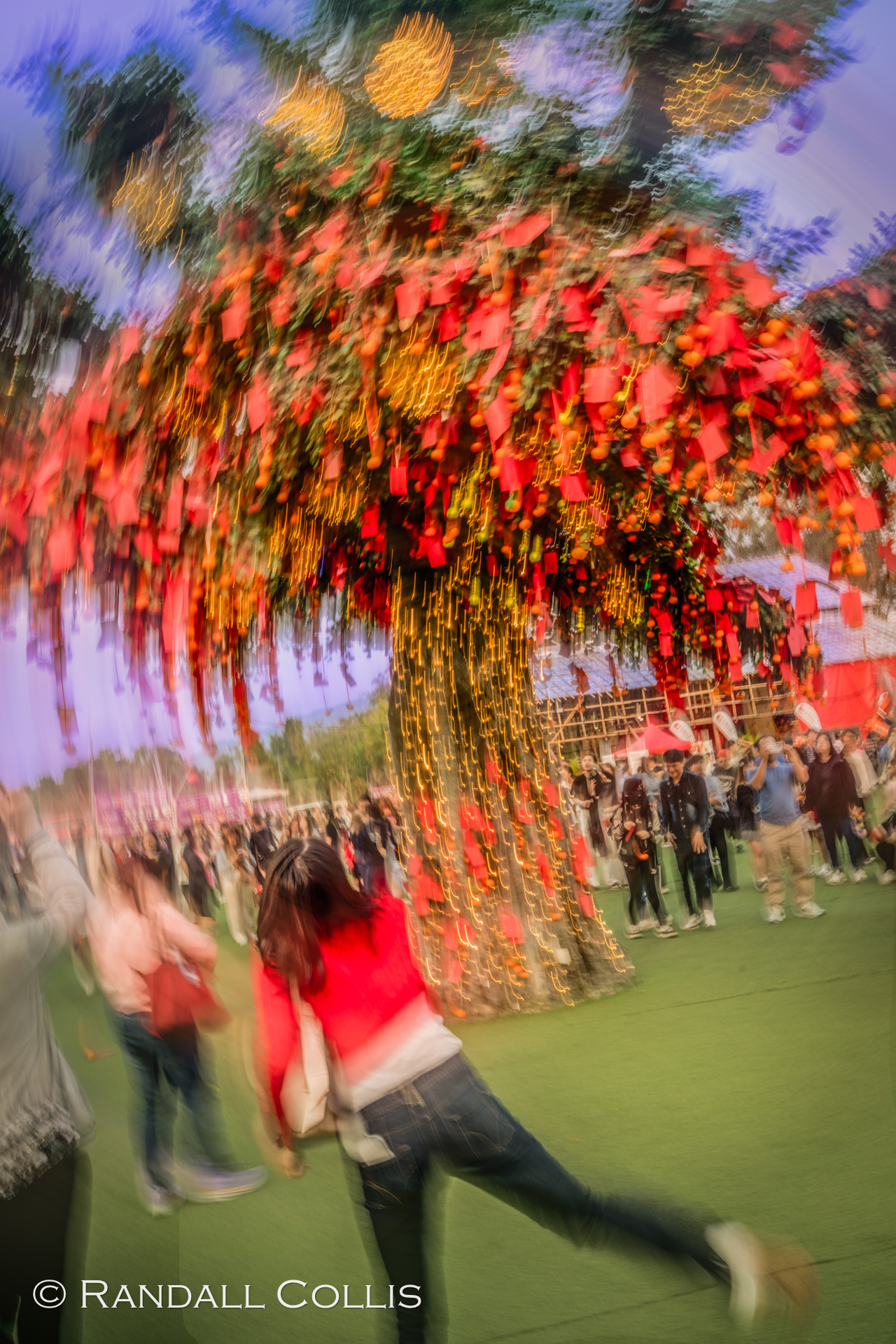
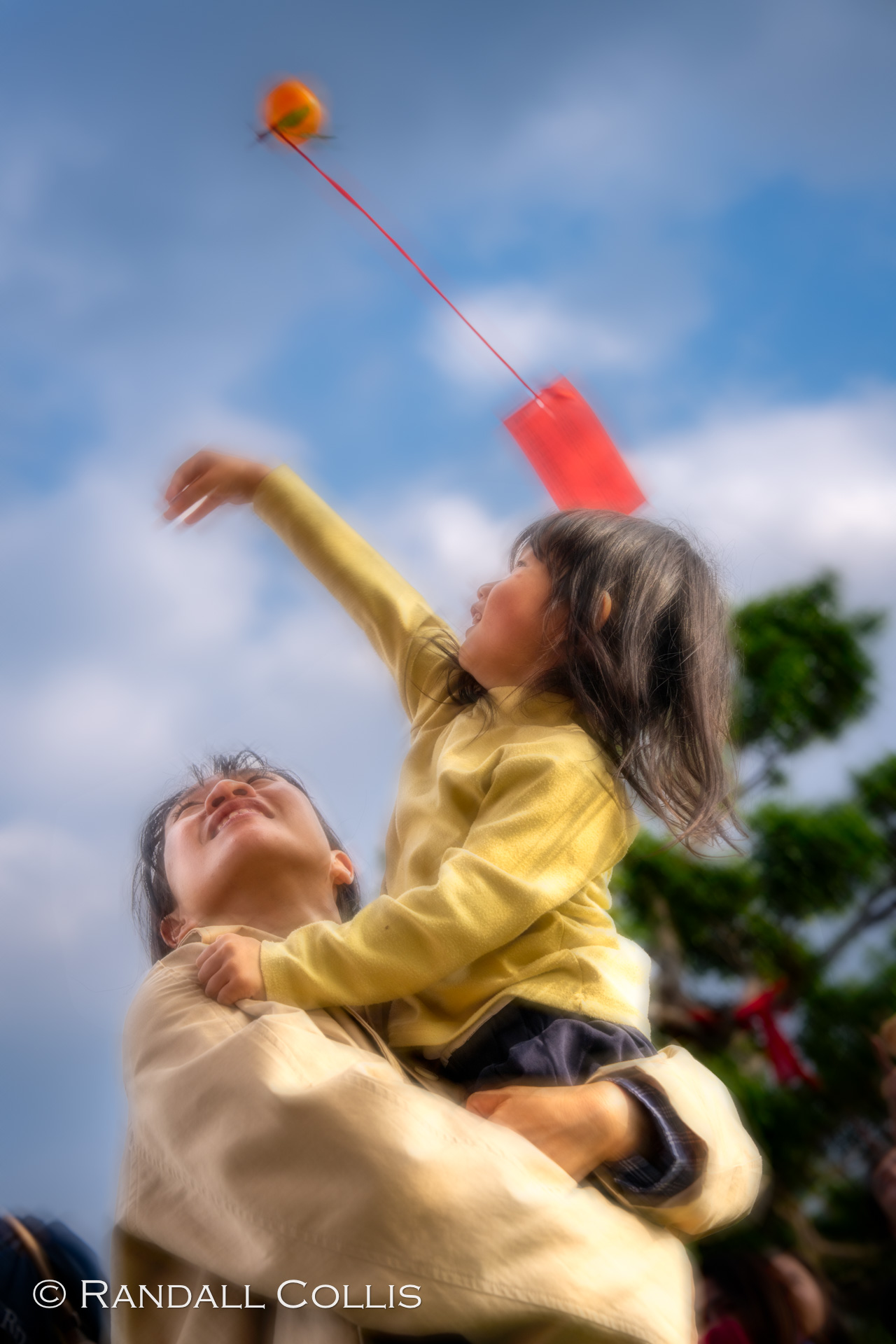
A blur of activity—the endless bombardment of placards sailing through the air. Most miss the target, and this is part of the process—a missed wish is not a bad omen, but an example of what life brings: when you don’t succeed, try again. A modern twist catches my eye: selfies—posing with oranges and wishes before letting them fly. This is just what the selfie should be, and it’s worth taking.
Kids chase loose oranges after each miss, and the energy only grows—I’m overwhelmed, too many smiles, too much laughter, too much reckless energy only the young can burn through—rituals I could get lost in.
The aches of my body disappear, and briefly, I’m young once again.
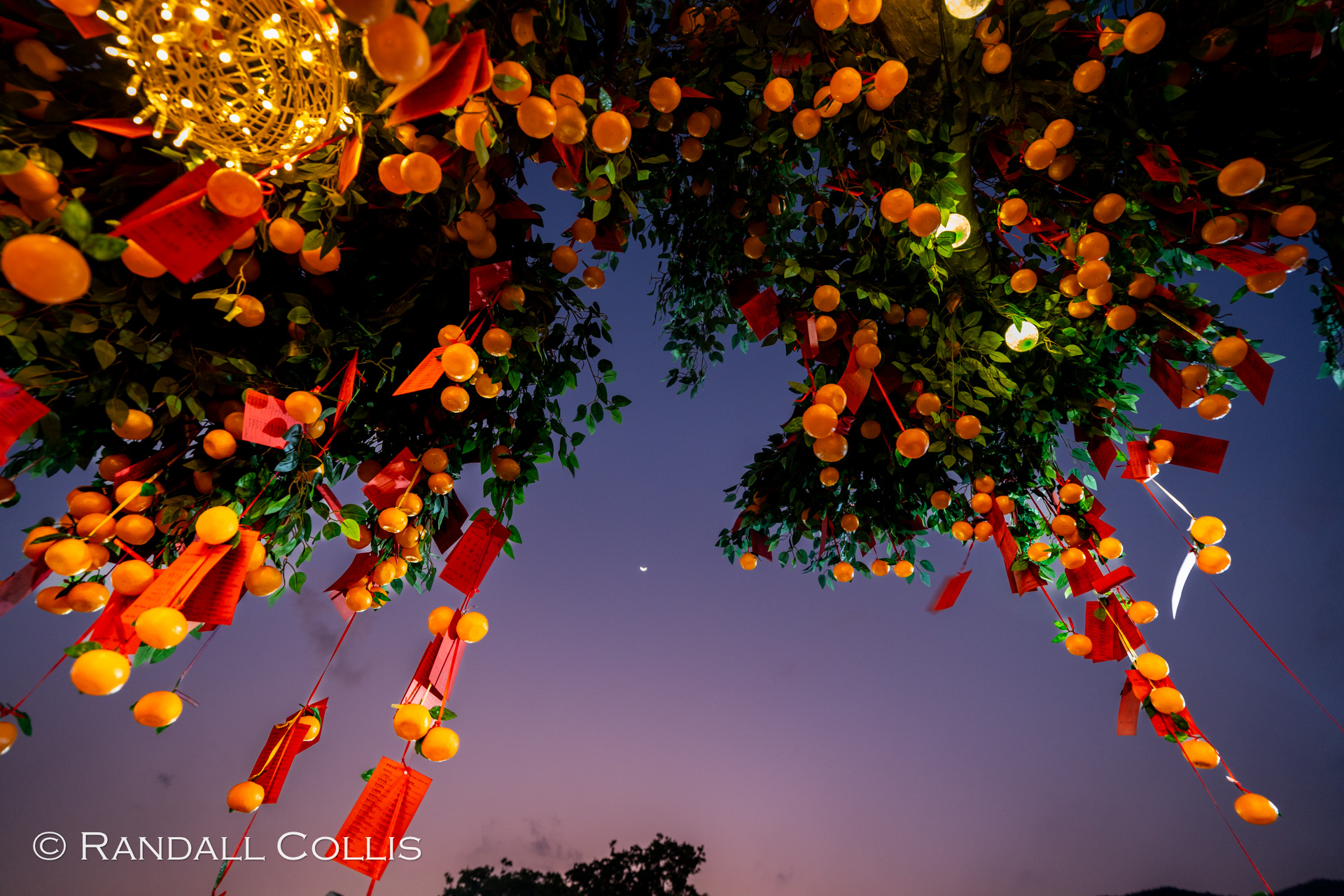
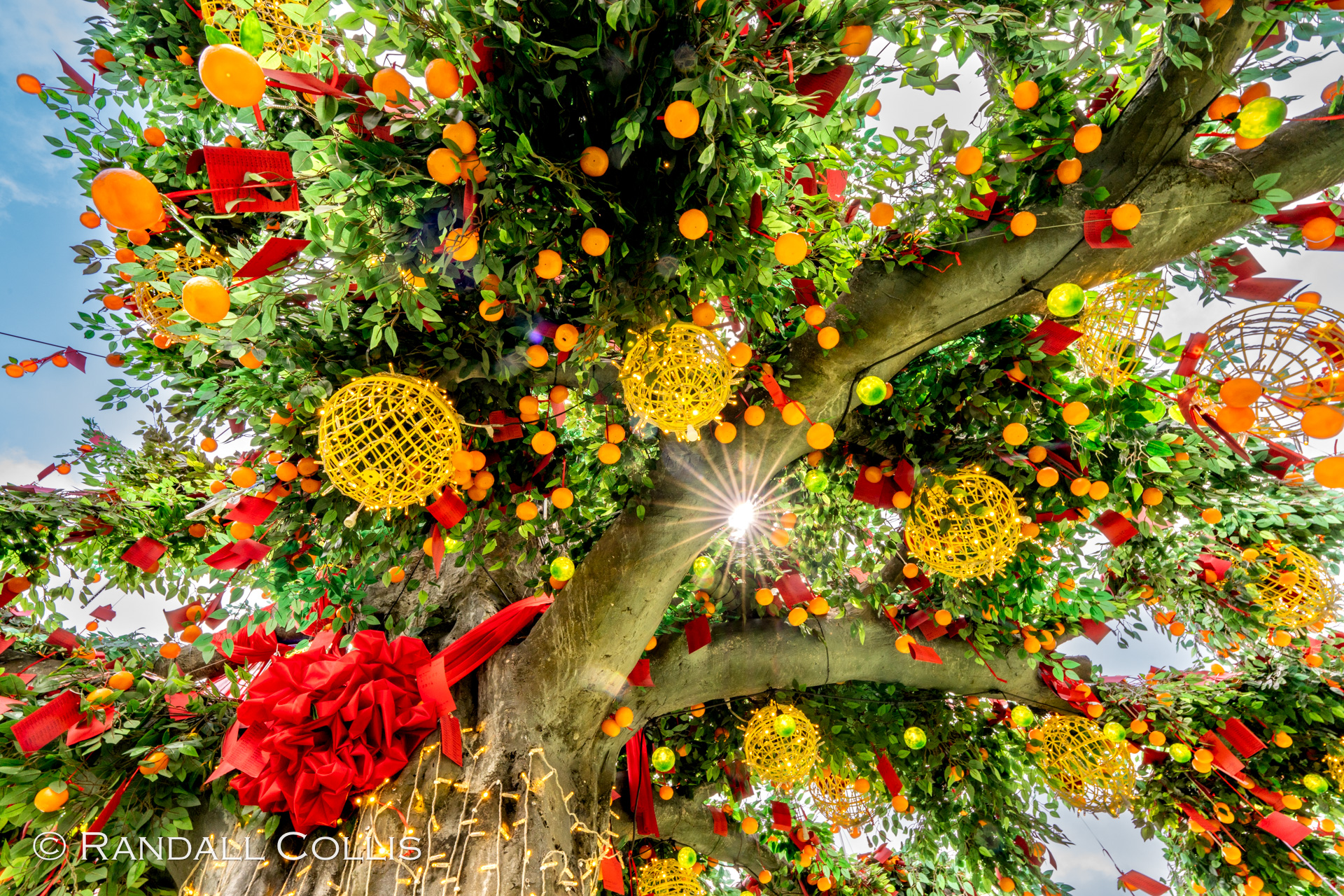
As dusk leans into the village, faces glow with twilight, and I relax on a bench and smile at what has been close to a perfect day. The tree flutters in the wind, each orange and red placard has a gravity of its own: the hope of being pulled up into the heavens.
Some wishes hang high, some dangle low… and a few lie in the dust waiting to be tried again. Which of them, I imagine, is closest to being answered? Does it matter? Of course not… but I can’t help thinking, “I hope mine is high enough, and written well enough that it’s considered.”
The tree holds everything we’ve been afraid to say out loud.
The sounds of bus doors opening distract me, and I see children running in circles around their parents as they begin to board the bus… they, too, I imagine, had a near-perfect day.
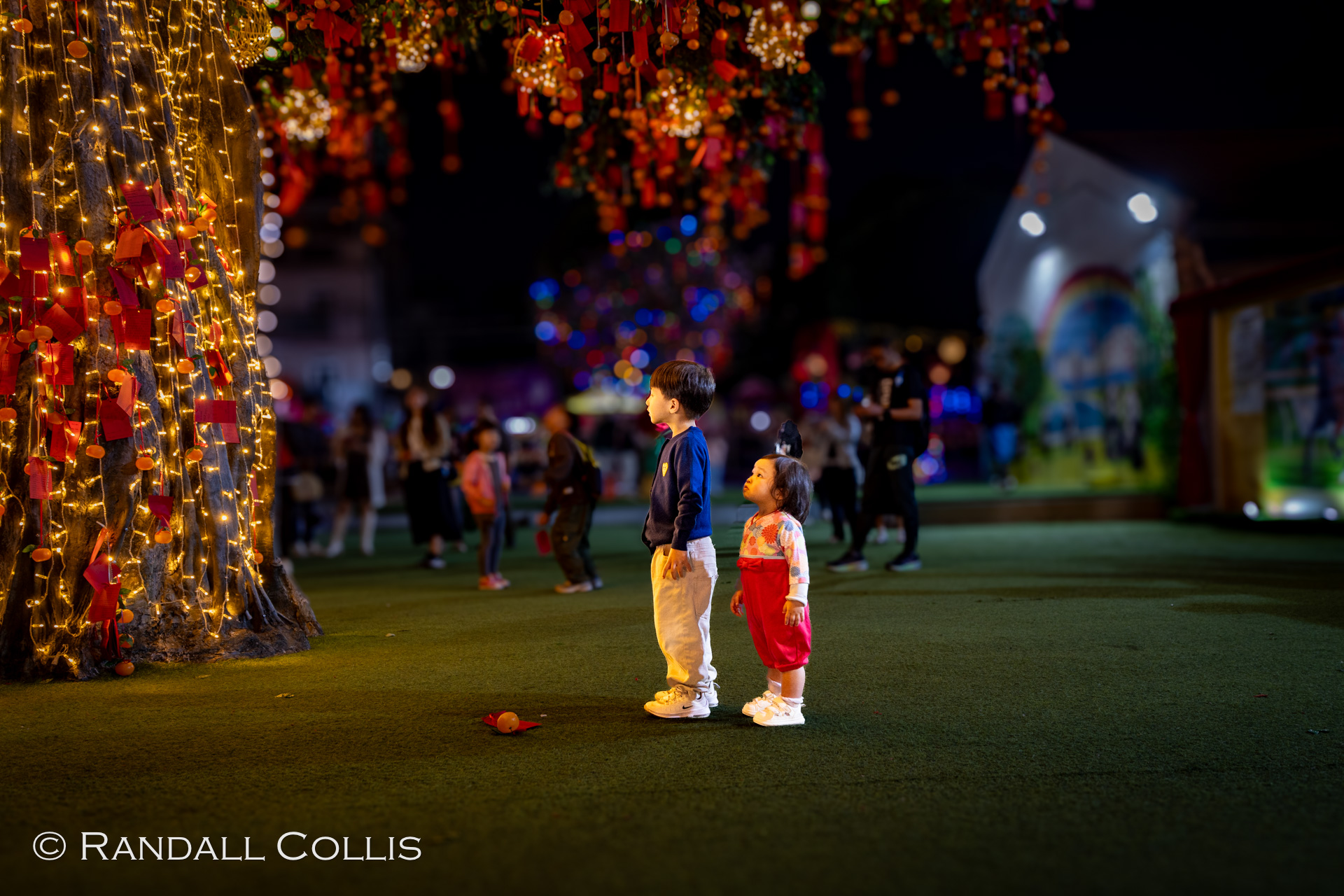
Before walking back to the village, I reflect on the faces of two young children looking up with wonder at the Well-Wishing Tree. They may not understand faith and hope as we do as adults, but what they feel runs deeper.
I begin reminiscing—smoke from Wong Tai Sin on my clothes and the echoes of laughter from Lam Tsuen in my mind. Between the solemn prayers and awkward throws, it comes down to what I saw in the eyes of those two kids that makes me realize something has shifted within me: the belief in the courage that makes every day better—this childlike sense that maybe, just maybe, a wish can be heard.
Relaxed, I breathe deeply, understanding the enigma of us all: people daring to speak their small hopes into a universe they cannot control, trusting—if only for a moment—that they are heard.


 Global Sojourns: Photography & Philosophy
Leave a reply to Timothy Price Cancel reply